Low MOQ bra development
Low MOQ Bra Manufacturer for OEM, ODM & Private Label
LJUNDERWEAR supports low-MOQ bra development for OEM, ODM and private-label programs. Selected programs using available materials and a focused specification may start from 50 pieces; final MOQ is confirmed by style, color, size matrix, materials and branding. Development can cover bralettes, wireless and underwire bras, molded-cup styles, full-coverage silhouettes and selected application-specific routes.

How the project starts
Start with a low-MOQ route that matches the specification
Every project is reviewed by style. Cup construction, band and cup sizing, support level, material availability, order quantity, branding and target-market requirements are confirmed before sample and bulk-production terms are set. This keeps MOQ, timing and evidence tied to the actual specification rather than a universal promise.
Range planning
Choose the Right Custom Bra Development Route
A category name does not define the complete product. Similar-looking bras can require different patterns, cup structures, elastic specifications, hardware and approval methods.
Bralette & Wireless
Confirm coverage, lining, elastic support, strap width, underband recovery and removable or fixed padding.
Molded & T-Shirt
Define cup mold, foam or spacer route, neckline shape, shell fabric and cup-to-band balance.
Underwire & Plunge
Review wire shape, channeling, cup volume, bridge height, cradle, side support and closure width.
Strapless & Convertible
Align band stability, elastic or grip solution, cup support, removable hardware and intended wear positions.
| Route | Primary development question | Relevant adjacent page |
|---|---|---|
| Sports bra | What activity, motion-control target and support method must the finished style address? | Keep detailed sports-bra testing on the future dedicated page. |
| Nursing bra | How should access, cup allowance, band adjustment and changing fit be approved? | Custom nursing bra manufacturer |
| Plus-size bra | Which representative sizes are required to validate cup, band, wing, strap and closure proportions? | Custom plus-size lingerie |
| Circular-knit seamless bra | Which parts are knitted, cut, sewn, bonded or added as secondary components? | Custom seamless underwear manufacturer |
Product references
Browse Bra Products for Your Development Brief
Use these current products to compare support, cup construction, access, band structure and finishing before defining an OEM, ODM or private-label brief.

Lace Underwire Support Bra
Review cup volume, wire shape, lace placement, strap position and back closure.
View product details →
Seamless V-Neck Wireless Bra
Compare neckline coverage, fabric recovery, cup support and underband stability.
View product details →
Soft Support Wireless Bralette
Review wire-free support, back construction, strap adjustment and edge finishing.
View product details →
Seamless Maternity Nursing Bra
Define changing-fit allowance, cup access, wide-strap comfort and band support.
View product details →
Front-Open Cotton Nursing Bra
Compare access, cotton composition, wire-free support and closure placement.
View product details →
Wireless Big-Cup Support Bra
Review cup depth, side support, wide straps, band stability and graded fit.
View product details →These products are construction references. Final materials, colors, size range, branding, MOQ and testing remain project-specific.
Component map
What Can Be Customized in a Bra Program?
Customization should connect every component to a fit, support, appearance or commercial requirement. Final options depend on the approved construction route and material availability.

RFQ principle: separate required features from optional preferences. This shows which decisions can use available components and which may require a new mold, pattern, color, material or trim.
Fit control
Approve the Band, Cup and Graded Sizes as One System
Bra support is affected by the relationship between cup, underband, bridge, side wing, straps, elastic recovery and material behavior. A fit that works in one base size may not remain balanced after grading.

Terms such as “high support,” “all-day comfort” or “second-skin fit” are not automatic properties of a silhouette. Define the intended use, construction, representative sizes and acceptance method for the project.
Material logic
Approve Materials and Construction Together
Material choice changes stretch, recovery, support, cup appearance, seam behavior and grading. The same fabric is not automatically suitable for a soft bralette, structured underwire bra and high-motion sports bra.

Material compatibility, adhesive route, temperature, pressure and dwell time affect bond appearance and durability. These inputs should be approved with the finished construction rather than as an isolated material choice.
Fabric & lining
Review weight, stretch direction, recovery, opacity, hand feel, lace or mesh placement and the need for lining or reinforcement.
Foam & spacer
Define thickness, density, molding or lamination route, breathability and recovery for the intended silhouette.
Elastic & hardware
Include elastic, wire, hook-and-eye tape, sliders, rings, clips and bonding materials in the approved bill of materials.
Modal, TENCEL™, bamboo-derived viscose and recycled-content options should be discussed by exact composition, supplier availability, performance requirements and supporting documents.
Use the intimate apparel fabric guide to structure the material brief.
Circular-knit seamless forms a knitted body with reduced cut-and-sew assembly. Bonded bras use cut components joined or finished through adhesive and heat processes. Some products combine techniques, but one route does not prove the other.
Review the custom seamless underwear manufacturer route for more detail.
Commercial clarity → MOQ
Low MOQ Bra Programs May Start From 50 Pieces
The 50-piece starting point applies to selected programs using available materials and a focused specification. Review the low-MOQ program requirements, then confirm how style, color, size split, materials and branding affect the quotation. Molded cups, custom wires, special hardware, custom colors or a broad size matrix can require a different minimum.
LJUNDERWEAR states capacity and line count at factory level. Project allocation, MOQ, size range, sampling schedule and bulk lead time remain subject to the confirmed quotation and production plan. Review the broader production setup in the factory overview.
What the quotation should state
What available documents may establish
Development workflow
Move From Product Brief to Bulk-Ready Bra
Each stage closes a different sourcing risk. The approved sample and order specification become the production reference.

Prepare the RFQ
What Should You Send for an Accurate Bra Manufacturing Quote?
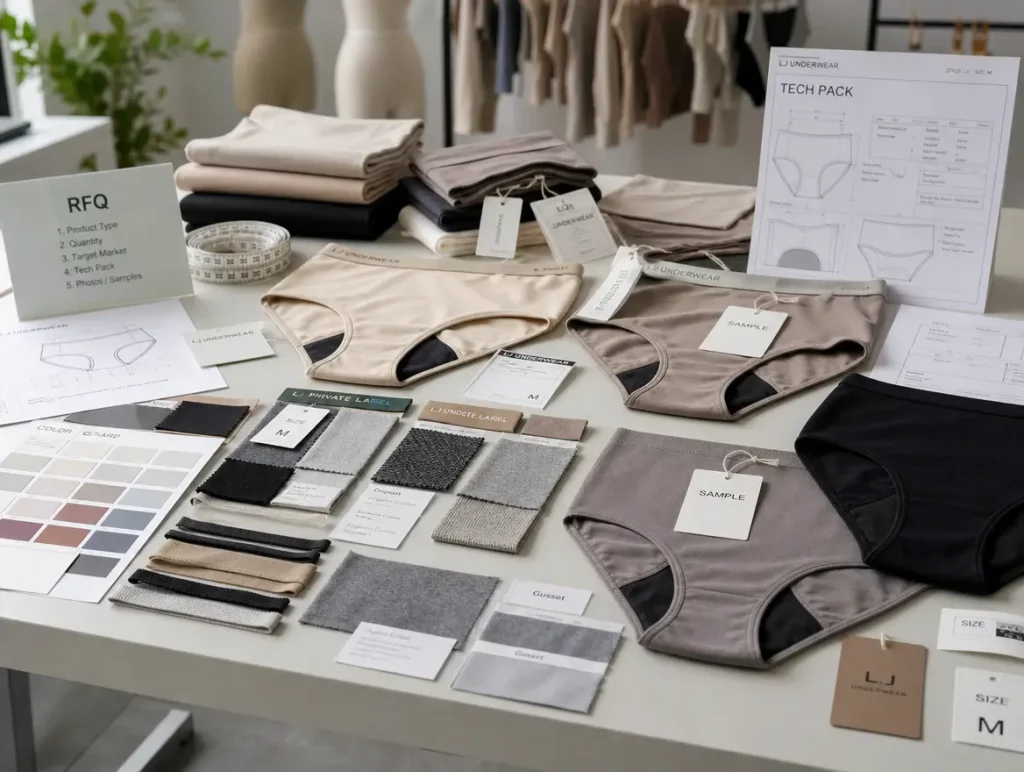
Send the information available now. Missing technical details can be identified during route review.
Separate requirements from preferences
Name the decisions that cannot change, then identify preferences that may move with cost, MOQ, material availability or construction feasibility.
This gives the development team a clearer basis for quotation and sample planning.
Buyer FAQ
FAQ About Low MOQ Bra Manufacturing
These answers define the development route. Final commercial terms, material options and evidence still follow the approved project.
What is a low MOQ bra manufacturer?
A low MOQ bra manufacturer supports smaller initial production runs under defined conditions. For LJUNDERWEAR, selected programs using available materials and a focused specification may start from 50 pieces. The confirmed MOQ still depends on style, color, size split, components, branding and packaging.
What types of bras can LJUNDERWEAR develop?
Programs can include bralettes, wireless bras, underwire bras, molded or T-shirt bras, full-coverage styles, push-up and plunge silhouettes, strapless or convertible bras and selected sports, nursing, plus-size and seamless routes. Final feasibility is confirmed by construction, size range, materials, components and order requirements.
What is the difference between OEM, ODM and private-label bras?
OEM is usually the clearer route when the buyer has a tech pack, specification or approved reference. ODM includes more support in defining the silhouette, construction, materials and fit direction. Private label refers to selling the finished product under the buyer’s brand and can be combined with either route.
What is the MOQ for custom bras?
MOQ is confirmed by style, color, size split, material route, components, branding and packaging. Selected low-MOQ programs using available materials and a focused specification may start from 50 pieces. Custom molds, custom-dyed fabric, special hardware or a broad band-and-cup matrix normally require a different quantity.
How long does custom bra sampling take?
Prepared briefs may qualify for a 72-hour feasibility review, which is not a promise of a completed physical sample within 72 hours. The sample schedule is confirmed after construction, materials and component availability are reviewed. Fit-critical programs may require more than one sample round.
Can certificate or test-report claims be used for every custom bra?
No. A certificate or report should be matched to its stated holder, material or specimen, product scope and validity. A document for one fabric or component should not be presented as proof for every bra style. Additional testing may be needed when materials, colors, suppliers or market requirements change.
Are seamless bras and bonded bras the same?
No. Circular-knit seamless bras are formed primarily through knitting with reduced cut-and-sew assembly. Bonded bras use cut components joined or finished through adhesive and heat processes. A product may combine methods, but the construction route and approval criteria should be identified separately.
What should be approved before bulk production?
The pre-production reference should confirm materials, colors, components, measurements, fit direction, grading, workmanship, labels, artwork, packaging, tolerances and inspection requirements. Bulk production should not begin while these order-critical details remain open.
Prepare the next decision
Start Your Low MOQ Bra Development Review
Send your bra type, size matrix, support target, material direction, estimated quantity, branding requirements, target market and available reference files. LJUNDERWEAR can review the route, identify the decisions required before sampling and prepare project-specific MOQ and timing guidance.
Prefer email? info@ljunderwear.comGet Your Free Quote & Technical Review
How To Submit Your RFQ
1.Send product type, quantity, and target market.
2.Attach tech packs, photos, or samples.
3.Get sample, MOQ, cost, and timeline guidance.