OEM, ODM & Private-Label Plus-Size Shapewear
Custom Plus-Size Shapewear Manufacturer For OEM, ODM & Private-Label Brands
LJUNDERWEAR develops wholesale plus-size bodysuits, control briefs and shaping shorts on dedicated graded fit blocks instead of scaling up a straight-size pattern. We define grading breaks, control zones, component changes and selected fit samples before bulk production. Selected prepared programs may start from 50 pcs per color and size; final MOQ is confirmed with the style and material route. OEKO-TEX® STANDARD 100 certified fabric options are available under certificate 26.HCN.12213.


Direct answer
Why Does Plus-Size Shapewear Need Its Own Fit Block?
A larger circumference does not preserve body proportion, pressure balance or movement. Start from a plus-size base, then grade the waist, hip, thigh and torso with defined breakpoints.
Before using a control claim: match the wording to the approved material, construction, size range and test method. This page makes no medical or weight-loss claim.
Plus-size product routes
Which Plus-Size Shapewear Style Should You Start With?
Choose a bodysuit, shaping short or control brief, then define the plus-size block, control zones, closures, edge finish and target test sizes.


Use these products as construction references. The quoted plus-size range still needs its own block, grading plan and selected-size approvals.
Common fit failures
Where Does Generic Shapewear Fail on Curvy Bodies?
The same pattern and elastic rule cannot carry every size. Waist stability, hip volume, thigh comfort, torso length and control distribution change across the plus range.
Why does the waistband roll or dig in?
Set waistband height, elastic construction, leg-opening measurement and recovery by size zone. Review sitting, bending and walking on named samples.
Why is the abdomen tight but the hip loose?
Grade the control panel, waist-to-hip balance and seat volume separately so one area does not carry all of the tension.
How do you reduce thigh chafing and unstable leg edges?
Confirm gusset width, inner-leg seams, thigh openings and skin-contact materials for the intended garment length and wear context.
Why does the bodysuit pull at the bust or crotch?
Review torso length, bust construction, strap range, closure position and dressing or toilet-access movement on named test wearers.
What should you confirm before grading?
Connect each field to the exact block, sample and revision under review.
Fabric and edge finish
Which Materials Hold Without Digging In?
Plus-size control comes from the body knit, power panel and edge finish working together. Confirm stretch direction, recovery and every skin-contact edge on the same selected-size sample.


| Component | Buyer decision | Plus-size sample check |
|---|---|---|
| Main body knit | Handfeel, weight, stretch direction and target control level | Movement and recovery without full-garment over-tension |
| Power panel | Target zone, panel shape, direction and seam or bonding route | Abdominal control without flattening the seat or pulling the hip |
| Waist and leg edge | Elastic width, bonded edge, cut edge or gripper where applicable | Rolling, pinching, chafing and recovery on selected sizes |
| Skin-contact lining | Fiber, finish, seam placement and care requirement | Contact comfort and stability during the intended wear period |
Control-zone construction
How Should Control Change Across the Plus-Size Range?
Give each area one clear job and define where the rule changes by size zone. Check that the waist, abdomen, seat and leg edges work together without rolling, pinching or chafing.
Keep the waistband stable
Record waistband height, reinforcement, opening measurement and recovery.
Set the abdominal control panel
Define panel area, material direction, seams or bonding and intended control level.
Shape the seat without flattening
Review volume, seam placement, panel tension and movement from front, side and back.
Keep the leg edge flat
Confirm opening stretch, finish, grip and comfort at the selected garment length.
Plus-size sampling brief
What Should You Confirm Before the First Sample?
Record the block, grading and control decisions so the buyer, pattern team and QC team review the same plus-size route. MOQ, timing and cost are confirmed in the quotation.
| Field | Record in the brief | Approval evidence |
|---|---|---|
| Product route | Bodysuit, control brief, waist shaper or shaping shorts | Named style, reference image and approved pattern version |
| Plus-size fit block | Target market, body-data source, base sizes and block origin | Measurement chart and named base-size sample |
| Grading plan | Grade rules, breakpoints, tolerances and component changes by size zone | Selected-size samples, measurement record and revision log |
| Control intent | Light, medium or firm; target zones and wear context | Approved panel map, material set and wearer-review questions |
| Material and edges | Weight, stretch direction, recovery, lining, elastic and leg finish | Approved material specification and project-relevant test scope |
| Construction | Panels, seams or bonding, gusset, closure, strap and trim | Signed PP sample, BOM and construction record |
| Commercial | Style, color and size breakdown, packaging, sample stages and target date | Confirmed project quotation and schedule |
Development checks
How Does LJUNDERWEAR Check Plus-Size Fit?
Material, measurements and comments are tied to the exact style, size and revision, including selected samples around planned grading breaks.


Why do brands choose LJUNDERWEAR for plus-size shapewear?
LJUNDERWEAR is a China-based plus-size shapewear manufacturer. When comparing suppliers, ask who can connect the plus-size block, grading breaks, selected-size fit records, seamless-knitting options, private-label finishing and document scope to the exact quoted style.
Claim review
Which Claims Need Project Evidence?
Use a product claim only when the approved garment and project records support it. Where a buyer requests a PFAS-free material claim, Eurofins report EFW726020391 may be referenced only when the quoted material and tested sample match the report scope.
Request a quote
What Should You Send for a Plus-Size Shapewear Quote?
Send the product route, control zones, target market, plus-size range, quantities and any details still to confirm. Choose ODM when LJUNDERWEAR should develop the style and material set from your brief; choose OEM when you provide an approved specification. Private-label branding, packaging and documents can be added to either route.
Information for your quote
What happens after the RFQ?
Sample approval
Which Plus-Size Samples Must Be Approved Before Bulk?
Approve the exact style, material set, selected sizes and revision so production and QC work from one plus-size reference set.

Keep researching
Related Plus-Size Products and Buyer Guides
Buyer FAQ
What Do Buyers Ask Before Plus-Size Shapewear Sampling?
Use these answers to prepare your brief. Final size coverage, construction, commercial terms and claim language depend on the approved project.
What is a plus-size shapewear manufacturer?
A plus-size shapewear manufacturer develops shaping garments on a defined plus-size fit block with planned grading breaks, control zones and selected-size approvals. The route is not based on scaling one straight-size pattern upward.
How is plus-size shapewear different from regular shapewear?
The difference begins with the pattern and grading plan. Waist-to-hip balance, thigh opening, torso length, seat volume and panel tension are reviewed for the plus-size block instead of inherited from a straight-size base.
Can a straight-size shapewear pattern be graded into plus sizes?
Proportional scaling alone is not enough. A plus-size route should define the target market, block source, base sizes, grading breaks, component changes and selected test sizes before bulk approval.
What control levels are available for plus-size shapewear?
Light, medium and firm are useful starting directions. The approved description must be tied to the garment, panel construction, material recovery, size range and wearer review rather than treated as one universal pressure claim.
Which plus-size shapewear styles can LJUNDERWEAR develop?
Development routes include open-bust and closed-bust bodysuits, high-waist control briefs, shaping shorts, waist shapers and selected seamless styles. Feasibility and final size coverage are confirmed from the buyer's brief.
What is the difference between OEM, ODM and private label for plus-size shapewear?
OEM follows an approved buyer specification. ODM starts from the brand's brief and includes style and material development support. Private-label branding, packaging and project documents can be added to either route. Every route still needs a named plus-size block, grading plan and selected-size approvals.
Can plus-size shapewear be developed for US, EU and AU brands?
Yes. Name the target market and body-data source before development because measurement standards, size labels, fit expectations, care wording, packaging and required documents vary. Final size coverage and project documents are confirmed for the quoted market.
Can plus-size shapewear use OEKO-TEX certified fabrics?
Yes. LJUNDERWEAR references OEKO-TEX® STANDARD 100 certificate 26.HCN.12213 for applicable certified fabrics. The certificate scope must be matched to the quoted material, sample and validity period.
What should I send for a plus-size shapewear quote?
Send the product route, target market, size range or measurement chart, control intent by zone, material direction, reference garment or tech pack, quantity breakdown, packaging and required documents.
What MOQ and sample timing are available for plus-size shapewear?
Selected prepared programs may start from 50 pcs per color and size. A complete brief may qualify for a 72-hour feasibility review, not a completed physical sample in 72 hours. MOQ, fit-sample stages, cost and timing are confirmed in the quotation.
What is the difference between shapewear and period underwear?
Shapewear is developed around fit, control zones, movement and low-profile edges. Period underwear is developed around a leakproof gusset, absorbency, coverage and wash testing. A brand can place both in one collection, but they require separate briefs, materials, tests and approvals.
Ready for a plus-size sample review?
Send Your Plus-Size Shapewear Brief
Send the product route, target market, plus-size plan, control zones, reference product, material direction and quantity breakdown. LJUNDERWEAR can then confirm the fit-block route, sample steps and commercial terms.
Get Your Free Quote & Technical Review
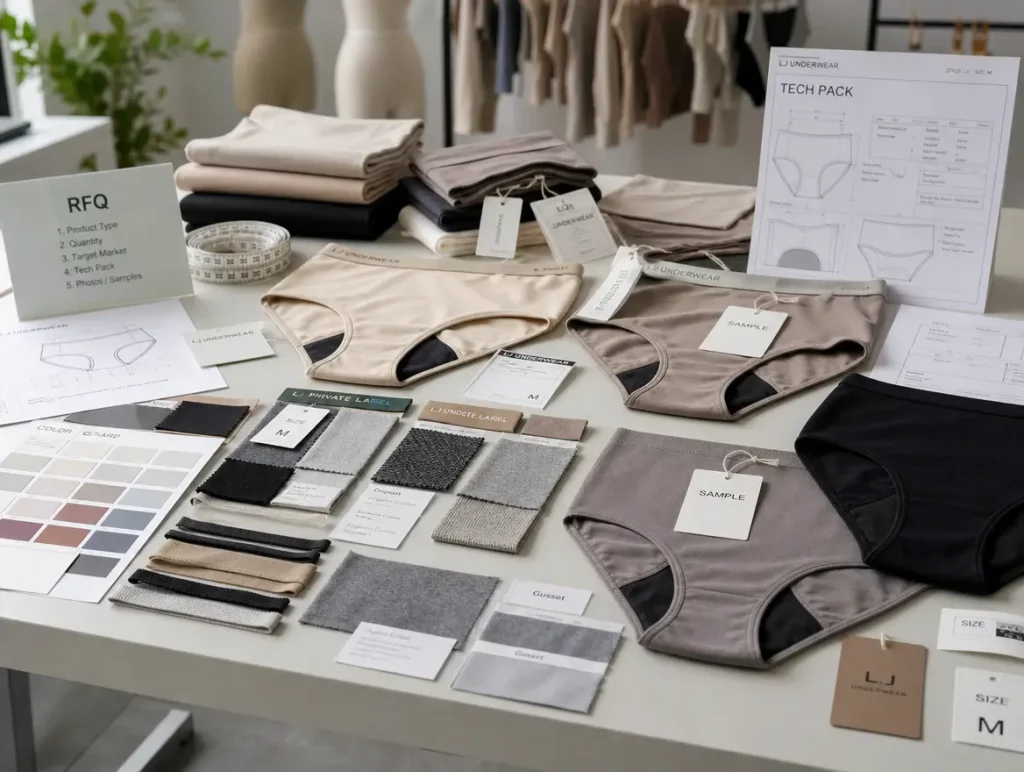
How To Submit Your RFQ
1.Send product type, quantity, and target market.
2.Attach tech packs, photos, or samples.
3.Get sample, MOQ, cost, and timeline guidance.