Fit system × protection system
Plus-Size Period Underwear Manufacturer
Custom Leakproof Menstrual Briefs
Plus-size period underwear is not a standard plus-size block with a period gusset added later. Across an extended size range, body proportion shifts change where leak points and waistband pressure actually sit, so the protection zone, gusset placement and waistband recovery must be engineered per named size. As a China-based OEM/ODM manufacturer, LJUNDERWEAR helps private-label teams define the silhouette, grading and gusset coverage before the quote is locked.
- 4XL / 5XL / 6XL grading plans
- Extended leak-coverage mapping
- PFAS-free material route
- Commute & active fit review

Direct answer
A Standard Plus-Size Block Cannot Simply Receive a Period Gusset
Fit changes affect where the protection panel sits, how it moves and which edges carry pressure. The block, gusset and components must therefore be reviewed as one system.
Start the commercial scope from LJUNDERWEAR's private-label OEM development route, then define the exact evidence required for this style.
Proportional enlargement alone does not prove back coverage, gusset reach, waistband recovery or leg-opening comfort across a wider size range.
Name the market and block source
Record the target consumer, base size and measurement source rather than starting from an undefined “plus-size” label.
Set grading and component breaks
Identify the size zones where rise, panel shape, elastic, binding or construction rules may need to change.
Approve fit and protection together
Connect wearer observations and protection tests to the exact sample, material lot and revision reviewed.
Buyer concern → development response
Turn Plus-Size Period Underwear Sourcing Decisions—Absorbency, Sizing, Fit, Fabric and Certification—Into Clear Approval Steps
Start With One Focused Program
Use the confirmed 50-piece MOQ to brief one clear silhouette; size mix, colors and specifications remain quotation inputs.
Build From a Named Market and Block
Connect the target wearer, base size, measurement source, grading plan and construction before bulk production.
Map Coverage on Named Sizes
Review front reach, useful width, back coverage and layer transitions on the sample sizes selected for approval.
Test the Movements That Change Fit
Use the same standing, seated, step and bend protocol for every named wearer size in the review plan.
Match Evidence Before Making a Claim
Connect certificates and reports to the relevant material, component, facility and quoted style before use.
Release One Traceable Revision
Link fit, protection, components and permitted wording to the exact approved sample and production record.
Product route selection
Choose the Silhouette Before Grading the Protection Zone
Each route changes rise, seat coverage, leg-opening geometry and gusset placement. Select one base route first, then document any size-zone changes.

Compare visible high-rise proportions and color options before confirming the base development route.
- Confirm rise and back coverage
- Record waistband and leg-opening construction
- Map the protection panel on named sizes
Coverage-led brief
Best when: higher front/back coverage and stable waist placement lead the brief.Review front rise, full seat coverage and waistband position against the intended wearing context.
Approve: waist roll, pressure and panel reachEveryday brief
Best when: familiar leg lines and everyday coverage are the first priority.Balance the back panel with stable gusset placement through seated and bending movements.
Approve: seat balance and edge pressureLonger leg route
Best when: added thigh coverage or a longer-leg silhouette is required.Define inseam, inner-thigh construction and how the protection zone transitions into the wider body.
Approve: ride-up, chafe points and seam bulkLow-profile route
Best when: reduced visible lines matter and the selected materials support the method.Confirm whether edge and lamination methods can meet recovery, care and size-zone needs.
Approve: edge recovery and layer compatibilityUse the live product starting points below to compare silhouettes, then identify the style number you want adapted for an extended-size program.
Related product starting points
Start With a Product Your Buyer Can Open, Compare and Quote
These live product pages turn the development discussion into a visible choice of rise, coverage, edge construction, fabric direction and protection route. Select a starting style first; the final plus-size block, range and performance specification are confirmed for the quoted project.
 Plus-size range
Custom Plus-Size Menstrual Briefs
A high-coverage starting point for custom colors, protection layers and named-size fit review.
View product details → 2XS–6XL · mid rise
50ml Extended-Size Period Panties
A higher-absorbency route with an existing extended-size direction for fuller-coverage programs.
View product details → XS–6XL · mesh panel
Mesh-Panel Period Briefs
A fashion-led extended-size route combining side-panel styling with four-layer protection.
View product details → L–6XL · high waist
High-Waist Period Shapewear
A tummy-control direction for buyers who need high-rise coverage and size-zone waistband review.
View product details → XS–4XL · boyshort
Cotton Menstrual Shorts
A longer-leg option for fuller seat coverage, stable gusset placement and movement review.
View product details → Up to 4XL · adjustable
Adjustable Period Underwear
An adaptive side-closure route for changing waist fit, bloating and easier dressing.
View product details →Product pages are reference starting points, not a universal promise for every size. Include the selected product URL in your RFQ so fit blocks, grading breaks, protection coverage and component rules can be confirmed together.
Fit × protection map
Place the Gusset From Body Landmarks, Not a Single Scaled Outline
Gusset length, width and transition points should follow the named block and selected sample sizes. Layer choices must also remain compatible with the stretch and recovery expected from the body fabric.

Record the intended front endpoint and confirm it remains correctly placed when rise and torso depth change.
Check useful protection width without creating rigid edges, bulk or a transition that distorts the leg opening.
Set coverage for the intended use case, then review placement when seated, stepping and bending.
Document face, transfer, absorbent and barrier layers by supplier reference and sample revision.
Define height, elastic width, joining method and recovery by size zone; review rolling, digging and return after care.
Check back coverage, leg-opening pressure and edge recovery through seated and bending positions on named sizes.
If a project includes a restricted-substance or fluorine-related requirement, define it through the PFAS-free material guide and confirm the applicable evidence before making a claim.
Size-zone engineering
Define Where the Rules Change Across the Range
A credible size plan records the base-size origin and any breakpoint where proportion, support, edge pressure or panel placement requires a different rule.
| Development area | Base-size record | Breakpoint question | Approval evidence |
|---|---|---|---|
| Rise & seat | Front/back rise, side seam and seat balance on the approved block. | AskDoes added circumference need a different rise or back-coverage rule? | Static balance and movement notes on named sizes. |
| Waistband | Finished height, extension, recovery and attachment method. | AskDoes width, elastic modulus or seam method change by size zone? | Extension/recovery record plus wearer pressure feedback. |
| Leg opening | Line, elastic or clean-edge construction and finished measurement. | AskDoes the same edge rule remain stable without cutting or opening? | Standing, seated, step and bend observations. |
| Gusset | Front/back reach, useful width, layer map and transition shape. | AskShould panel dimensions or transition geometry change independently? | Placement review plus project-defined performance testing. |
| Seams & binding | Seam route, allowance, bulk and skin-contact surfaces. | AskDoes stress or thickness require a different finish? | Movement, stretch and care-cycle inspection. |
Prepare measurement, block and grading inputs with the private-label fit and grading guide.
Named-size validation
Validate Coverage and Comfort Across Named Wearer Sizes
One plus-size label cannot represent every body proportion. Selected sample sizes should review static balance, seated position, step, bend, waistband return, leg opening and gusset placement through the same recorded protocol.
Check balance and coverage
Record waist position, front/back rise, seat coverage, leg line and visible tension.
Repeat named movements
Use the same protocol and observation fields for each selected wearer size.
Recheck recovery after care
Connect dimensional or visual changes to the project-defined wash method and revision.
Close evidence before bulk
Approve the exact pattern, bill of materials, sample record and permitted wording.
Use the sampling and development process to structure revisions, review gates and approval records.

RFQ input checklist
Bring the Inputs That Change the Quote
A useful RFQ defines the product and evidence route before asking for a universal size range, absorbency label or price.
Market sizing and commercial opportunity are handled separately in the plus-size period underwear market insight.
Useful attachments: tech pack or sketch, base-size chart, reference photos, colorways, packaging requirements and any required certificate or report format.
Target market & wearer
Country or region, consumer profile, size-chart source and intended use.
Product route
Silhouette, rise, coverage, body fabric, construction references and available tech pack or images.
Protection brief
Intended leak-proof claim route, gusset coverage, layer preferences and test method.
Size architecture
Base size, proposed range, grading source and likely component breakpoints.
Compliance scope
Destination-market requirements, substance restrictions and evidence format.
Commercial inputs
50-piece MOQ, colorways, packaging, forecast, target timing and quotation assumptions for the wholesale program.


Scope boundary: every certificate or report must be matched to the material, component, facility and style quoted before it supports a product claim.
Buyer FAQ
Questions to Resolve Before Sampling
These answers define the development route without promising a universal specification.
What makes plus-size period underwear different to develop?
The fit block and protection panel influence each other. Wider size coverage can change rise, seat balance, leg openings, gusset placement, elastic load and component rules, so proportional scaling alone is not a sufficient approval method.
Can one gusset pattern be graded across the whole size range?
That depends on the block, silhouette, intended coverage and test evidence. Gusset dimensions and transition geometry may need their own breakpoints rather than following every body-pattern grade proportionally.
How is the final size range confirmed?
The range is confirmed from the approved block source, grading plan, selected sample sizes, component rules and wearer-review evidence. It should not be assumed from a generic plus-size label.
Which product route should a private-label brand start with?
Start with the silhouette that best matches the target wearer and use case, then define coverage, gusset placement, body fabric and edge construction. A focused first route creates clearer sampling evidence than several undefined silhouettes.
How should absorbency or leak-protection claims be handled?
Define the intended market wording, product construction, test method and acceptance criteria before publication. A claim should be tied to the exact tested sample and must not be inferred from an unverified material description.
What information is needed for an accurate quotation?
Provide the target market, wearer and size inputs, product silhouette, protection brief, material or compliance requirements, colors, packaging, forecast and timing. The MOQ is 50 pieces; LJUNDERWEAR will confirm the size mix and other project-specific commercial terms in the quotation.
Start with a named brief
Build a Plus-Size Period Underwear Program That Can Be Approved Size by Size
Send the target market, product route, size architecture and protection requirements. LJUNDERWEAR will review the development inputs and confirm the feasible sampling and quotation scope.
MOQ is 50 pieces. Final product coverage, size range, claims, testing, lead time and other commercial terms are confirmed for the quoted project.
Get Your Free Quote & Technical Review
How To Submit Your RFQ
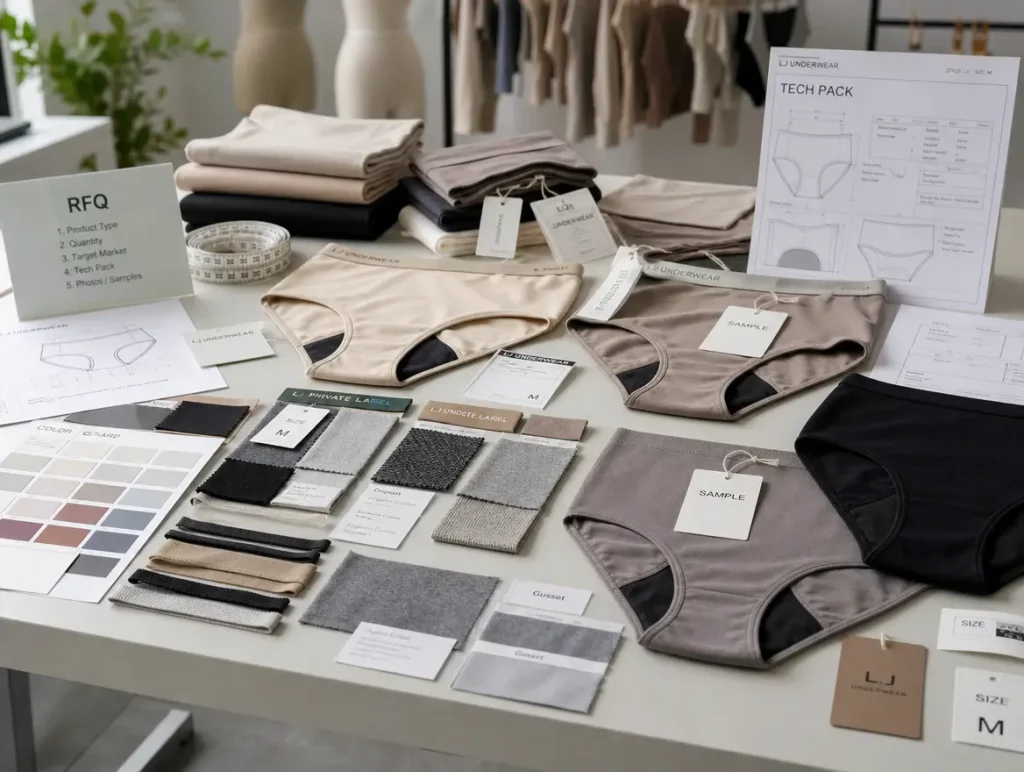
1.Send product type, quantity, and target market.
2.Attach tech packs, photos, or samples.
3.Get sample, MOQ, cost, and timeline guidance.