Industry insight / Period swimwear development
Period Swimwear Material Logic: Chlorine-Resistant Specs for OEM Buyers
Developing period swimwear is not the same as changing the cut of standard underwear. Wet use adds chlorine exposure, possible UPF change, gusset behavior under saturation, water intake and barrier noise. This guide separates material certification, applicable test reports and finished-style wet-fit validation so buyers can define category-specific PP-sample gates before bulk.

At a glance / Buyer decision
Which Period Swimwear Material Risks Should Buyers Validate?
The decision is not “Which fabric sounds technical?” It is whether the selected fabric, construction, and finished style have a repeatable approval record for the target market and use case.
Material route
Record the outer fabric, elastane, lining, barrier and color references. A fiber or membrane name alone does not prove chlorine durability.
Claim route
If UPF or PFAS language is planned, connect the exact sample or component to the applicable method, report, scope and label rules.
Finished-style route
Add wet fit, movement, water intake or drainage, seam behavior and wearer observations to the PP record. Dry fit is only one input.
Evidence map / Keep scopes separate
Chlorine-Resistant Period Swimwear: Three Evidence Layers for UPF and Wet Use
Match each buyer question to the method that answers it: UV transmission, chlorinated-water colorfastness and finished-style wet fit require separate records and approval scopes.
UV transmission or blocking
AATCC TM183 measures UV transmission or blocking through fabric in dry or wet status. It does not establish chlorine-cycle durability or finished-garment labelling by itself.
Chlorinated-water colorfastness
ISO 105-E03:2010 addresses resistance of textile color to chlorinated swimming-pool water. It does not prove elastane recovery, UPF retention or leak protection.
Wet fit and construction
Define the selected garment, size, pre-treatment, water condition, movement sequence, observation points and pass/fail reference. This is a project protocol unless a named method is agreed.


PP sample / Approval table
OEM Spec Checklist for Period Swimwear Development
Use this as a buyer worksheet. The binding project specification must replace every generic entry with the approved method, value or record.
| Control | What to lock | Why the record matters |
|---|---|---|
| Outer fabric and elastane | Material code, composition, knit, color and agreed exposure/recovery checks | “Chlorine-resistant” remains undefined without the selected material and method. |
| UPF claim, if used | Target-market standard, tested sample/color, report and label scope | A fabric result can be overstated as an all-color or all-market garment claim. |
| Gusset system | Layer map, placement, seam/bonding route and wet/dynamic protocol | Static capacity alone leaves wet movement and construction risks unresolved. |
| Grading and wet fit | Approved block, representative sizes, water condition and movement sequence | A garment that looks correct dry may behave differently wet. |
| PFAS language, if used | Component/sample identity, method, analyte scope, reporting limit, laboratory and date | A report must not be generalized beyond the tested item. |
| MOQ and timing | Quote-confirmed style, color, size split, testing and approval schedule | Commercial numbers vary with the actual development route. |
Buyer handoff / Before sampling
Send a Period Swimwear Claim Plan Before Sampling
Bring these inputs into the development conversation so the quote, sample and PP record describe the same product decision.
Buyer supplies
- Target market and sales channel
- Style reference and intended activity
- Planned UPF, PFAS or performance wording
- Size range and fit priorities
- Available material or lab requirements
PP record returns
- Approved material and component codes
- Report references with specimen scope
- Construction and seam route
- Wet-fit and movement observations
- Approved claim wording and limitations
Frequently asked questions
Period Swimwear Material Logic FAQ
Direct answers for buyers preparing a product brief, sample review or PP approval.
Can I use my existing period underwear fabric for a swimwear line?
What evidence should I request for a UPF claim?
Why is a static absorbency result not enough for swimwear?
What should I approve at PP sample?
What are the MOQ and sample lead time?
Review the Swimwear Evidence Plan Before You Approve the Sample
Send the target market, style reference, intended claims, size range and available tech pack. LJUNDERWEAR can review the development inputs and identify which items still need project-specific confirmation.
Request a Swim Spec ReviewGet Your Free Quote & Technical Review
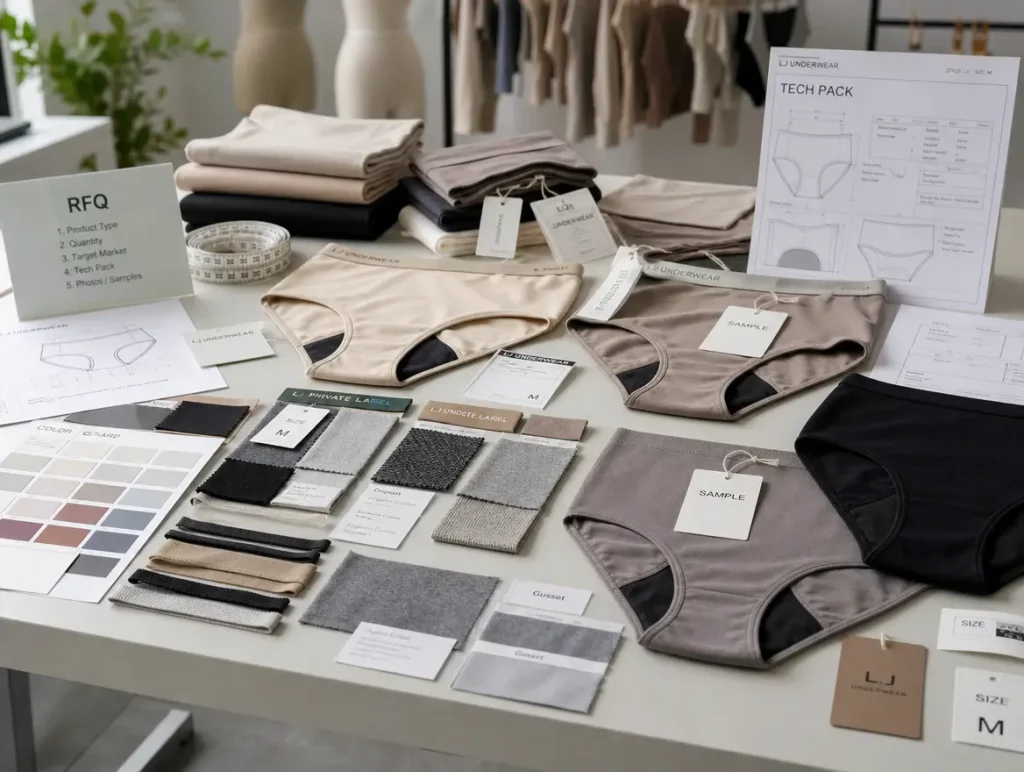
How To Submit Your RFQ
1.Send product type, quantity, and target market.
2.Attach tech packs, photos, or samples.
3.Get sample, MOQ, cost, and timeline guidance.