OEM · ODM · PRIVATE LABEL
Custom Transgender Underwear Manufacturer
LJUNDERWEAR develops custom transgender and gender-affirming underwear for lingerie, shapewear and inclusive-apparel brands. Start with the intended wear occasion, front-panel construction, rise, waistband tension, material behavior, branding and packaging.

FRONT-PANEL CONSTRUCTION
Tucking, No-Tuck or Padded: Choose a Transgender Underwear Construction Route
This page focuses on tucking briefs and thongs, no-tuck shaping briefs, padded hip-enhancing styles and tucking swim bottoms. Select the starting route from the wear brief, then review fit, comfort and material behavior on the sample.
No-tuck shaping brief
Everyday wear under looser clothing. Review soft panel direction, lining, rise and waistband pressure.
Tucking brief (gaff-style)
A smooth profile under close outer layers. Some buyers source this route as gaff-style tucking underwear. Define the front panel, leg opening and edge construction per style.
Tucking thong
Reduced back coverage. Confirm panel width, intended coverage, edge finish and position stability.
Padded brief
Added hip and seat volume. Specify the insert, cavity, retention method, weight and wash requirements.
Tucking swim bottom
Swimwear use. Agree panel attachment, fabric behavior, drying and chlorine-exposure requirements.


| Wear occasion | Starting route | Sample review focus |
|---|---|---|
| Everyday use | No-tuck shaping brief | Skin comfort, breathability and waistband pressure. |
| Close outer layers | Tucking brief | Front-profile appearance, edge comfort and position stability. |
| Minimal back coverage | Tucking thong | Panel coverage, stability and edge finish. |
| Added volume | Padded brief | Insert cavity, retention and wash behavior. |
| Swimwear | Tucking swim bottom | Material behavior after immersion and agreed care requirements. |
The approved fit sample confirms the route. These routes are developed as apparel-construction programs for private-label brands. LJUNDERWEAR does not manufacture anatomical prosthetics, silicone products or adult-novelty items; development follows the approved tech pack, material documentation and inspection plan for each style. Apparel construction and sample review do not create a medical claim. For related compression and panel construction, see plus-size shapewear.
BUYER DEFINITION
What Is Gender-Affirming Underwear? Tuck and No-Tuck Routes Explained
Gender-affirming underwear is developed around the wearer’s preferred front profile, coverage and comfort. A no-tuck route prioritizes everyday shaping and comfort; a tucking route adds front-panel control for a smoother profile under the intended outer garment. The approved style, sample and stated test scope define the final result.
No-tuck shaping brief
Use a softer panel, selected lining and balanced waistband tension for everyday wear. This route is suited to brands seeking a shaping brief without specifying a tucking construction.
Tucking brief or thong
Use a defined front panel, leg opening, edge finish and fit review for the intended coverage and profile. Gaff-style terminology may be used in buyer sourcing language, while the approved specification defines the construction.
Starting styles
No-Tuck Shaping Thong Starting Styles
Use these uploaded styles as a visual starting point, then confirm construction, fit, materials and branding requirements for the development brief.


FIT CONTROL
Fit Control for Tucking Briefs and Thongs: Front Panel, Rise and Waistband
Increasing panel tension alone does not create a better product. Review panel depth, rise, leg-opening position, gusset construction and waistband recovery together.
- Intended wear occasion and required front profile.
- Base-size block, size system and representative sizes.
- Front-panel width, depth, stretch resistance and tolerance.
- Rise position and interaction with the panel.
- Leg opening, edge finish, waistband dimensions and recovery.
- Gusset lining and its attachment to the panel.
- Insert-pocket dimensions and retention method for padded routes.
Review waist, hip, rise and panel depth together when defining the size range. The private-label fit guide explains how blocks, measurements and grading approvals connect.


MATERIAL BEHAVIOR
Materials for Gender-Affirming Underwear: Stretch, Recovery and Breathability
Material selection affects recovery, thermal comfort, edge behavior and wear feel. A no-tuck everyday brief and a tucking thong should not automatically use the same fabric and panel package.
Face fabric
Nylon-elastane or polyester-elastane can be reviewed for composition, weight, opacity, stretch direction and color route.
Panel knit or mesh
Define panel thickness, stretch resistance, edge treatment and compatibility with the proposed construction.
Gusset and lining
Review cotton, modal or microfiber options for fiber content, hand feel, dye behavior and care requirements.
Insert system
For padded routes, specify insert density, weight, cavity dimensions, retention method and wash requirements.
Seam and bond route
Compare flatlock or bonded construction for material compatibility, edge bulk, bond strength and wash behavior.
Waistband elastic
Approve width, tension, recovery and contact feel in the fit sample rather than from an untested specification alone.

MATERIAL DIRECTION
Review the material and component direction before sampling
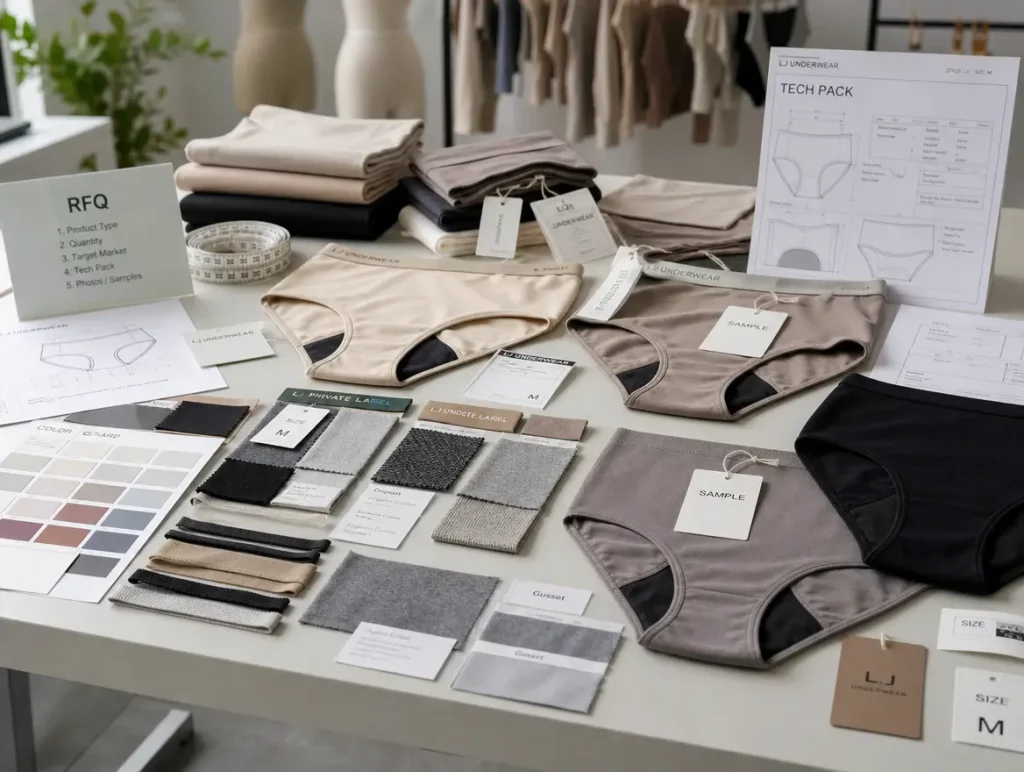
Use a controlled material board to review swatches, panel mesh, gusset lining and elastic together. Confirm the final components for the proposed style before making any performance or certification claim.
Bonded panel construction can be considered when the selected fabrics and adhesive system are compatible. Review bond strength, edge bulk, skin-contact feel and wash behavior on the proposed sample. See custom seamless underwear manufacturer and the fabric guide for related routes.
REAL WEAR CONDITIONS
Tucking Underwear for Everyday Wear, Movement and Swimming
Set the intended wear duration, movement, outer layer and care routine first. The selected panel, lining and edge route can then be specified for the approved sample.
FIT AND CARE
Comfort, fit and care controls
Contact-zone comfort
Set panel and gusset construction for the intended wear duration instead of maximizing compression across the garment.
Edge behavior
Choose flatlock or bonded options according to edge bulk, friction and pressure on the approved sample.
Grading logic
Grade hip, rise and panel depth together across the agreed representative sizes.
Care and stability
Define wash method, cycle count and recovery checks before testing and packaging approval.
VALIDATION PLAN
What the sample should prove
Profile and position
Check front-profile appearance and position stability on the agreed representative sizes.
Stretch and stability
Check panel stretch resistance, recovery and dimensional stability of the panel, gusset and waistband.
Wash and color
Check recovery after agreed laundering, plus color retention and wash fastness where required by the selected materials.
Edges and padded routes
Check edge friction, pressure and bond durability; for padded routes, check insert retention and cavity integrity.
Laboratory results and wearer feedback answer different questions and should be recorded separately. Use a performance claim only when the relevant material or garment result supports it.


DEVELOPMENT WORKFLOW
Develop the Style From Brief to Approved Production Reference
Define the brief
Wear occasion, profile, market, size system and brand position.
Review feasibility
Panel, gusset, rise, inserts and materials before pattern work.
Build the tech pack
Measurements, tolerances, components, artwork and packaging.
Develop samples
Review fit, measurements, workmanship and agreed route.
Approve sizes
Confirm the base and representative graded sizes.
Lock reference
Approve materials, colors, labels, packaging and sealed sample.
Inspect and ship
Use order-specific inspection records and commercial terms.
Commercial framework
The quotation sets terms for the selected style. Existing fabrics and block patterns may simplify a first run; new panels, inserts, custom elastic or dye lots require a separate feasibility and cost review. For eligible styles, MOQ starts at 50 pieces per style; confirm the applicable quantity by style, color and size. Confirm prototype timing after tech-pack and material review, fit revisions, pre-production sample, quality criteria, payment and shipment terms.


PRODUCTION CONTEXT
Show the people and controls behind the approved reference
These real factory images show pattern preparation and sewing-floor context. Product-specific approval, measurements and materials remain defined by the quoted style and approved sample.
OEM begins with the buyer’s design and specification; ODM adds design-development support; private label adds buyer-owned branding and packaging. See custom design ODM and sampling development. For a 50-piece MOQ discussion, include the style, color and size breakdown in the quotation request. Include confidentiality, ownership and any exclusivity requirements in writing before protected files are shared.
WHOLESALE AND EXPORT
Wholesale and Export: Sourcing Custom Transgender Underwear From China
LJUNDERWEAR supports China-based OEM, ODM and private-label sourcing for brands developing tucking, no-tuck and shaping underwear. A clear brief lets the team identify the appropriate construction, material route, sample plan and commercial inputs before quotation. For eligible styles, MOQ starts at 50 pieces per style; the applicable quantity is confirmed by style, color and size after the construction review.
Wholesale and bulk planning
Quote quantities by style, color and size so the supplier can separate available materials, new development requirements and order-specific minimums.
Export and market inputs
Share the destination market, required label content, packaging, test requests and inspection expectations before the sample route is locked.
Private-label handoff
Provide artwork, labeling, packaging direction and any neutral-naming or discreet-packaging requirements with the product brief.
Supplier documentation
Match material certificates, factory information and test evidence to the proposed style and the destination-market request.
Commercial terms, shipping method, documentation and bulk timing are confirmed for the proposed style and destination. For sample dispatch, the selected sample and shipping documents are prepared for the named destination after the delivery contact, destination requirements and commercial route are confirmed. Send the brief to request a transgender-underwear quote.
DOCUMENT CONTROL
Certifications for Custom Transgender Underwear: OEKO-TEX, ISO and Test Scope
Request documents for the selected fabric, panel, lining, elastic and inserts. Check the holder, issuer, validity and named scope against the components in the proposed style.
Company-level sourcing evidence is separate from a product claim: LJUNDERWEAR’s 2023 Intertek 13-point ESG assessment covers labor, environmental and governance controls. It does not certify a specific transgender-underwear style, material or performance result.
Material document
Use a material certificate only for the named material route. Check every selected component before applying a finished-style claim.
OEKO-TEX® 26.HCN.12213Management system
Management-system certificates describe the named organization and scope. They are not product-performance certificates.
ISO 9001 · ISO 14001Project test record
Request a report matching the submitted sample, method, date and conditions when a project requires testing or restricted-substance claims.
STYLE-SPECIFIC SCOPE| Document type | Correct project use | Required scope check |
|---|---|---|
| OEKO-TEX® STANDARD 100 | Request the current document for the proposed material route. | Holder, validity, Product Class and named component scope. |
| ISO 9001 / ISO 14001 | Reference the documented management system only. | Certificate holder, stated activity scope and current validity. |
| Test report | Support only the submitted sample and listed method. | Material, construction, color, date, conditions and report result. |
Reports for another product family do not establish performance or restricted-substance status for a new style. If the brief calls for recycled content, organic fiber, restricted-substance testing or a PFAS-related claim, identify the relevant components and supporting documents before material approval. See certifications and factory overview.
BUYER NEXT STEP
Need documents for a specific material or market?
Send the proposed style, material route, destination market and required claim wording. The document review can separate existing evidence from items that need new testing or supplier confirmation.
BUYER INPUTS
Prepare the Information Needed for a Quotation
Send enough information to separate confirmed requirements from open development choices.
Product and fit
Wear occasion, front profile, reference style or drawing, target market, size system, base measurements, hip and rise.
Construction and material
Panel, gusset, lining, elastic and insert preferences; rise, leg opening, back coverage and any care requirements.
Brand and quantity
Colorways, artwork, packaging needs, estimated quantity by style, color and size, and target launch timing.
Documents and delivery
Required certificates, reports, target-market requirements, destination and inspection expectations.
When details are incomplete, state what still needs to be decided. The quotation should distinguish confirmed requirements, proposed routes and items subject to sample or document approval. Include discreet-packaging or neutral-naming requirements at this stage.
BUYER QUESTIONS
Frequently Asked Questions About Custom Transgender Underwear Manufacturing
What does a transgender underwear manufacturer develop?
A manufacturer converts a wear brief into a product specification covering the front-panel construction, rise, gusset, lining, waistband tension, materials, components, branding, packaging and production controls. The approved tech pack and sample define the final style.
What product types can be developed?
Tucking briefs and thongs, including gaff-style tucking underwear, no-tuck shaping briefs, padded hip-enhancing briefs and tucking swim bottoms can be explored through a style-specific feasibility review. Each route needs its own front-panel, lining and fit specification.
What is the MOQ for custom transgender underwear?
For eligible styles, MOQ starts at 50 pieces per style. The applicable quantity is confirmed by style, color and size after reviewing the construction and available materials. New panels, custom elastic, inserts or dye lots can introduce additional minimums. Send your quantity breakdown so the quotation can identify the applicable requirements.
How long does sampling take?
Prototype timing is confirmed per style after tech-pack and material review. The sample plan should separate the first prototype, fit revisions, pre-production sample and final approval. Material sourcing, insert tooling and transit time should be listed separately, with dates confirmed for the proposed construction.
Which fabrics are suitable for these styles?
Common routes include nylon-elastane or polyester-elastane face fabrics, power mesh or high-modulus knit panels, cotton or modal gusset linings and soft microfiber linings. Selection should follow the required flattening level, wear duration, breathability and wash requirements of the intended occasion.
Can these styles use OEKO-TEX® materials?
They can use materials supported by matching OEKO-TEX® documentation. LJUNDERWEAR document reference 26.HCN.12213 must be checked for holder, validity and named article or component scope before it is applied to a new style or claim.
How should sizing be handled?
Grading should combine hip, rise and panel depth rather than waist alone, and the panel should be reviewed across representative sizes. Approve the agreed representative sizes before bulk production.
Do you support OEM, ODM and private-label transgender underwear?
Yes. OEM begins with the buyer’s design and specification, ODM includes design-development support, and private label adds buyer-owned branding and packaging. The division of responsibilities should be recorded before sampling.
How is a new program kept confidential?
Include confidentiality requirements in the initial brief. Agree any NDA, pattern and artwork ownership, access restrictions, and exclusivity terms in writing before sharing protected files or starting the relevant development work. Discreet packaging and neutral product naming can be specified during packaging development.
START THE PROJECT
Request a Development Review
Send your wear occasion, required front profile, reference style, size plan, materials, quantity and launch timing. LJUNDERWEAR will identify the inputs required for quotation and sampling.
Get Your Free Quote & Technical Review
How To Submit Your RFQ
1.Send product type, quantity, and target market.
2.Attach tech packs, photos, or samples.
3.Get sample, MOQ, cost, and timeline guidance.