Restricted substances evidence
REACH and SVHC Compliance for Custom Underwear Manufacturing
Use Report EFW726033785-S-01 as sample-level restricted-substances evidence for one submitted nursing bra, tested against three Annex XVII entries plus a 253-substance SVHC screen. REACH is a regulation, not a certification scheme: the document is a test report, and it applies to the named components and the stated test period only.

Decision summary
What This Report Establishes
REACH is a legal duty, not a certificate. Report EFW726033785-S-01, issued by Eurofins MTS Consumer Product Testing (Dongguan) Co. Ltd to Shenzhen Ljvogues Sports Fashion Limited, LJUNDERWEAR's parent entity, records four restricted-substances tests on one submitted black nursing bra. It is evidence for the named components and stated test period only; it is not a product-range or production-batch certification.
Evidence at a glance
What Report EFW726033785-S-01 Records
Quote each field with the report beside it. REACH has no public register, so the signed document and the underlying regulation are the verification route.
| Report number | EFW726033785-S-01 |
|---|---|
| Issuing laboratory | Eurofins MTS Consumer Product Testing (Dongguan) Co. Ltd |
| Issue date | 27 March 2026 |
| Applicant | Shenzhen Ljvogues Sports Fashion Limited, LJUNDERWEAR's parent entity |
| Sample description | Nursing bra, colour black |
| Fibre content | 95% bamboo, 5% spandex |
| Stated end use | Use during breastfeeding |
| Sample received | 16 March 2026 |
| Test period | 16 to 27 March 2026 |
| Tests performed | Four: azo dyes, free and hydrolysed formaldehyde, nickel release, and a 253-substance SVHC screen |
| Result | Pass on all four |
| SVHC list version | ECHA Candidate List published 4 February 2026, 253 substances |
| Report authentication | Signed by the laboratory's Softline Division manager, paginated 1 to 19. No QR code is printed, and REACH has no public register in which a report can be looked up. |
Entity relationship: Shenzhen Ljvogues Sports Fashion Limited, named as the applicant, is LJUNDERWEAR's parent entity. Scope: the six named components of one submitted sample, and the stated test period only — nothing above is a claim about a product range or a production batch. Report age: issued 27 March 2026; compare that date against the recency window your buyer applies at the time of the order, commonly 6 or 12 months for restricted-substances reports. Report age does not answer the SVHC list question, which is rechecked separately. Last evidence review: 22 September 2026, scheduled for annual recheck each March.
Test method boundary
Test Methods and Decision Basis
Keep the method, the entry and the laboratory's own assessment basis beside each result before quoting it to a buyer or a marketplace. For a changed fibre, finish or trim route, check the Fabric Guide before transferring any wording.


| Azo dyes | Entry 43 screening on A1, A5 and A6. The report records a 10 mg/kg reporting limit; white component A2 is marked not applicable. |
|---|---|
| Formaldehyde | Entry 72 screening on the main fabric groups: A1+A2 and A5+A6. |
| Nickel release | Entry 27 screening on metal hook and clasp components A3 and A4. |
| Nickel requirement & pass basis | The report remark gives 0.5 µg/cm²/week for prolonged skin contact and 0.2 for post assemblies. Its EN 1811 assessment records the tested metal components as pass. |
| SVHC screening | 253 Candidate List SVHCs, using the list dated 4 February 2026. The test covers fabric groups A1+A2+A5+A6 and metal group A3+A4. |
| Reported limitations | The report says the Candidate List version may change. It also notes total chromium and boron detection and asks the importer or manufacturer to check material composition. |
| Sample and bulk limit | Results apply only to the submitted sample; they are not a statement about bulk production. The laboratory records that only sample A was tested. |
| The 0.1% threshold | Above 0.1% by weight, Article 33 requires available safe-use information. SCIP duties depend on the responsible EU supply-chain actor. Recheck the threshold when the material route changes. |
| Laboratory accreditation | The report does not print an ISO/IEC 17025 statement. If an accredited result is required, obtain written scope confirmation from the issuing laboratory. |
Need evidence for a fluorine-based finish? Read the separate PFAS test scope; this REACH report does not test PFAS on its own.
Original document view
Read the Report's Own Remarks, Not Only the Pass Lines
Four passes describe the screened results. The remarks on page 18 describe what those passes do not settle, including the SVHC list version and an element-level detection. Both belong in the buyer file.


View component and method evidence


Claim boundary
Separate a Test Report from a Certification Claim
REACH obligations depend on the article, its substance content, the actor placing it on the market and the destination market. A laboratory report supports that assessment with dated evidence for named components; it does not certify a product range.
Report EFW726033785-S-01 can support
- Restricted-substances results for the six named components.
- The Annex XVII entry, method and limit behind each result.
- A 253-substance SVHC screen against a dated candidate list.
- Laboratory identity, sample description and test period.
- A dated evidence window for the buyer file, matched to your own recency rule.
It does not prove on its own
- That every LJUNDERWEAR product or SKU complies.
- That a later production batch matches the tested sample.
- That Annex XVII entries outside 43, 72 and 27 were assessed.
- That chromium and boron are absent from the material.
- That the screening still matches the current ECHA candidate list.
- Which Article 33 or SCIP duty holder applies to a particular EU supply chain.
Tested sample notes
- Sample
- Nursing bra, black
- Fibre content
- 95% bamboo, 5% spandex
- Stated end use
- Use during breastfeeding
- Components
- A1 to A6
- Sample received
- 16 March 2026
- Report issued
- 27 March 2026
When this evidence needs rechecking
Recheck when the fabric route, dye or finish, elastic, metal hardware or supplier changes, and recheck the SVHC candidate list version at every order confirmation. Additional Annex XVII entries are scoped as separate tests where a market or retailer asks for them.
Related buyer resources
Start From a Nursing and Maternity Route
Report EFW726033785-S-01 was run on a submitted nursing bra, so the closest routes sit in the nursing and maternity line. Each material route needs its own component list, current Candidate List check and matching evidence before any chemical-safety wording is quoted.
Explore maternity product routes →Buyer workflow
How to Use Report EFW726033785-S-01
Treat the report as one record in a buyer file, and recheck the parts that move: the material route and the SVHC list version.
Identify
Confirm the report number, laboratory and issue date.
Match
Compare the order components to the A1 to A6 breakdown.
Read
Check the remarks, not only the pass lines.
Recheck
Compare the SVHC list version with the version in force.
Extend
Scope additional entries as separate tests where required.
Related evidence routes
Buyer next step
Need REACH Evidence for a Specific Material Route?
Send the intended fabric, elastic, hardware, trim and destination market for your underwear programme. LJUNDERWEAR can map report EFW726033785-S-01 and the other available documents to your OEM or ODM brief, state which components they cover, and identify what a route described as “REACH-ready” would still need in separate testing.
Buyer FAQ
FAQ About REACH and SVHC Evidence
These answers keep the claim tied to the report and avoid a certification claim the document cannot carry.
Does REACH require a certificate to sell underwear in the EU?
No. REACH is a regulation, not a certification scheme, and no REACH certificate is issued. The applicable obligation depends on the article, the substance, the supply-chain role and the market. Suppliers support a buyer's assessment with laboratory test reports and material documentation. A document presented as a REACH certificate is either a test report under another name or something that needs explaining.
What is the difference between a REACH test report and a REACH certificate?
A test report records that specific components of a specific sample were tested against specific regulatory entries on a specific set of dates, and it states its own applicability limits. A certificate would imply a certifying body, a scope of certified production and a validity period. REACH has none of those. Buyers should ask which entries were tested, which components were in scope, and what the report says about bulk production.
Is REACH compliance the same as OEKO-TEX certification?
No, and the two do different jobs. REACH is a legal obligation that applies to every article placed on the EU market. OEKO-TEX STANDARD 100 is a voluntary certification tested by an independent institute, with a certificate number a buyer can check in a public database, and many European retailers ask for it as their practical proof point. LJUNDERWEAR holds OEKO-TEX STANDARD 100 certificate 26.HCN.12213 for the named Product Class I articles, and report EFW726033785-S-01 adds the restricted-substances detail that sits behind a REACH claim. Neither document substitutes for the other, and the scope of each has to be matched to the material in the order.
Does report EFW726033785-S-01 cover every LJUNDERWEAR product?
No. It covers the six named components of one submitted black nursing bra in 95% bamboo and 5% spandex, tested in March 2026 against Entry 43, Entry 72 and Entry 27 of Annex XVII plus a 253-substance SVHC screen. Other styles, colours, fabric routes and hardware need their own matching evidence, and the report itself states that its results do not refer to bulk production.
What are the 253 SVHC substances, and why does the list date matter?
The SVHC Candidate List is maintained by the European Chemicals Agency and revised roughly twice a year, usually in January and July. It lists substances that are carcinogenic, mutagenic or toxic to reproduction, persistent and bioaccumulative, or of equivalent concern such as endocrine disruptors. The version applied here was published on 4 February 2026 and contained 253 entries. Each revision adds, and occasionally reclassifies, substances. Because a screening is only as current as the list behind it, the version date printed in the report should be compared with the version in force when the order is confirmed, and a re-screen requested where the list has moved.
How do I obtain a copy of report EFW726033785-S-01?
Request it directly with your material list or tech pack. The full signed report runs to 19 pages and includes the test sections, the component breakdown and the complete substance list. The same request can be used to map which existing documents apply to your planned construction and which components would need additional testing.
How often does a REACH test report need to be updated?
There is no fixed legal expiry for a test report, so the answer comes from the file rules your own market or retailer applies, commonly a 6-month or 12-month window. The practical trigger is the ECHA Candidate List, which is revised roughly twice a year. A report is only current if the list version printed in it still matches the version in force at your order confirmation date. Confirm the recency window your buyer will hold you to before sampling, rather than after.
Does REACH testing also cover PFAS?
Not on its own. Report EFW726033785-S-01 is a targeted programme: Entry 43 azo dyes, Entry 72 formaldehyde, Entry 27 nickel release and a 253-substance SVHC screen. Fluorine-based finishes are a separate test object with a separate report, and EU-level work on a wider PFAS restriction under REACH sits outside this document entirely. Confirm the current regulatory position with your compliance adviser before relying on either document for a PFAS claim, and do not merge the two results.
Does REACH require testing for every order?
No. REACH sets no per-order testing requirement. The applicable restrictions and communication duties depend on the article, the substance, the supply-chain role and the destination market. Buyers therefore usually ask for evidence per material route rather than per order: a new fabric, dye, trim supplier or hardware change is a new evidence question, while a repeat order on an unchanged route is normally assessed against the existing report and the supplier's material declarations.
Match the report to the order
Put REACH Evidence in the Buyer File Before You Quote
Share your material route, component list and destination market so the correct report and the correct Annex XVII entries can be confirmed before sampling, wholesale or private-label launch, marketplace listing or bulk approval.
Get Your Free Quote & Technical Review
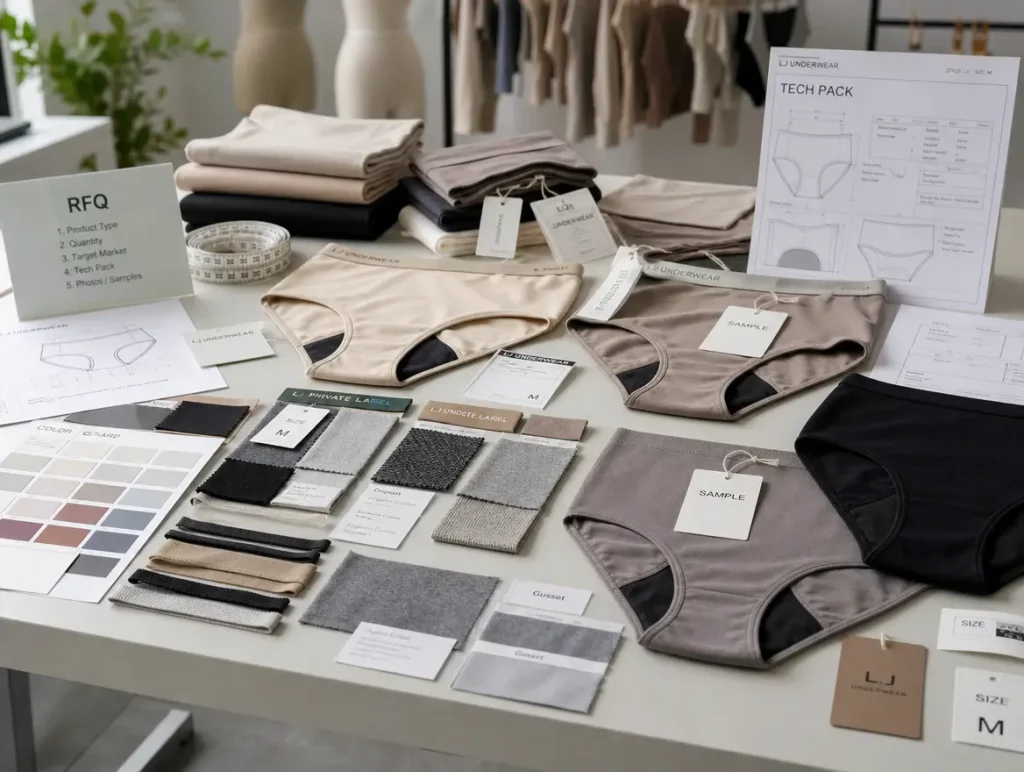
How To Submit Your RFQ
1.Send product type, quantity, and target market.
2.Attach tech packs, photos, or samples.
3.Get sample, MOQ, cost, and timeline guidance.