
Market-specific fit programs
Custom Plus-Size Lingerie Manufacturer
For Private Label Brands— Fit Blocks, Grading & Wear-Test Programs
A credible custom plus-size lingerie program starts with its own fit plan. As a plus-size intimates manufacturer, LJUNDERWEAR helps buyers define the target market, block source, base sizes, grading breaks, product construction and wear-test evidence before bulk production. Available development routes cover selected bra styles up to 4XL, lingerie sets up to 5XL and period underwear up to 6XL. Final sizing is matched to the style, block, material and target market.

Direct answer
Why a Plus-Size Range Needs Its Own Development Route
A plus-size range is a system of deliberate fit decisions—not one pattern enlarged indefinitely.
Cup depth, strap load, rise, coverage, control zones and movement may not progress at one constant rate. The buyer and manufacturer therefore need an agreed route from market definition to sample approval.
Name the wearer context
Record the country or region, intended consumer and body-data source.
Set blocks and breaks
Define the block origin, base sizes and the zones where grading or component rules change.
Approve the sample
Link measurements, revisions and wearer feedback to the exact sample reviewed.
Product-use matrix
One Fit Program, Separate Product Decisions
This cross-category program connects market definition, block origin, grading breaks and approval evidence. Available routes cover selected bra styles up to 4XL, lingerie sets up to 5XL and period underwear up to 6XL, with product-specific grading and sample approval.
| Product family | Plus-size decision | Common risk to review | Detailed route |
|---|---|---|---|
| Bras & bralettes | Cup progression, frame, underband, strap width and closure | Scaling the cup without changing support components | Selected styles up to 4XL |
| Panties | Rise, back coverage, leg opening, gusset and waistband | Waist or leg tension that changes across size zones | Sets up to 5XL; period styles up to 6XL |
| Selected shapewear | Target zones, movement, openings, edge finish and control intent | Rolling, pinching or an undefined compression claim | Capability confirmation |
| Selected sports items | Activity, support intent, band stability, straps and thermal comfort | Using one sample size to claim performance across the range | Test-plan confirmation |
Fit moments, not one size label
Build a Plus-Size Program Around Real Development Moments
A complete program needs different reviews across the block, sample, component, range and handoff stages. Each scene below answers a separate development question and creates a clearer record for the next approval.


Fit architecture
Turn Inclusive Sizing Into an Approval System
The final rules depend on the market, product, material and approved samples. The workflow below identifies what must be decided without inventing a universal size range.

Construction decisions
Change Components Where the Product Load Changes
A size label is not construction evidence. Review the parts that carry load, control movement or touch the body, then record any size-zone changes.
Straps and underband
Record: width, adjustability, elastic route, closure and comfort review.
Waist and leg openings
Record: opening measurement, stretch, recovery and pressure feedback.
Panels and control zones
Record: intended function, material, seam route and movement risk.
Materials and components
Record: approved specification, color, care route and substitution rule.
Specification and evidence
Fields to Confirm Before Quotation and Bulk Approval
Build the quotation and approval route around the buyer's market, product construction and fit requirements.
| Field group | Record in the brief | Evidence before bulk |
|---|---|---|
| Market | Country/region, target consumer, body-data source | Approved project brief and label route |
| Fit | Block origin, base sizes, grading breaks, tolerance | Measurement chart, pattern version and approval log |
| Product | Family, structure, support/control intent, component changes | Named sample and signed construction record |
| Wear test | Selected sizes, wearer profile, movement, review questions | Dated feedback linked to the sample version |
| Materials | Fabric, elastic, hardware, stretch/recovery and care route | Approved material specification and test scope |
| Commercial | Style/color/size breakdown, packaging, sample stages, target date | Project quotation and confirmed schedule |
Documented system and material references: Fit blocks and materials are developed under ISO 9001 (cert. 62726Q00153R001) and ISO 14001 (cert. 62726E00103R001) systems, with OEKO-TEX® STANDARD 100 certified fabrics (cert. 26.HCN.12213). PFAS-free claims for applicable functional styles are verified by Eurofins (report EFW726020391). Certificate and report scope must be matched to the material and style quoted.
Prepare the project
Send Enough Information for a Useful Fit Review
A structured brief lets the sampling team identify missing fit evidence, product constraints and approval steps before a commercial promise is made.
Buyer input checklist
Review route
Frequently asked questions
Plus-Size Lingerie Development FAQ
What is the maximum size available for custom plus-size lingerie?
Available development routes cover selected bra styles up to 4XL, lingerie sets up to 5XL and period underwear up to 6XL. For a new custom style, the final size range is matched to the product construction, approved block, material stretch, grading route and sample plan.
Why can proportional grading be insufficient for some plus-size ranges?
Body proportions, cup volume, rise, coverage and component load may not change at one constant rate. The development team should define base sizes and grading breaks, then verify the selected rules through measurement, fitting and wearer feedback for the target market.
How are base sizes and grading breaks selected?
Selection starts with the target market, body-data source, product family and available approved block. The project record should state which base sizes are sampled and where measurement or component rules change. LJUNDERWEAR confirms the feasible route after reviewing the buyer's inputs.
What wear-test inputs should a buyer provide?
Provide the target wearer profile, selected sample sizes, intended use, movement scenarios, review questions and acceptance owner. Feedback should identify the sample version and date so revisions can be traced before PP approval.
How are bra, panty and shapewear requirements separated?
The cross-category plan can share market and size architecture, but each product keeps its own construction specification. Bras focus on cups, frames, bands and straps; panties on rise, coverage and openings; shapewear on target zones, movement, edges and defined control intent.
Which evidence should be approved before bulk production?
Approve the applicable measurement chart, pattern or block version, grading rules, sample and revision log, materials, components, tolerances, wearer feedback and PP reference. Commercial terms and test scope should also be confirmed for the specific project.
Start with the fit evidence
Review Your Plus-Size Lingerie Program Before Sampling
Send the target market, intended products, size direction, reference block or garments, materials and quantity breakdown. The review will identify the fit route and the items that still need confirmation.
Get Your Free Quote & Technical Review
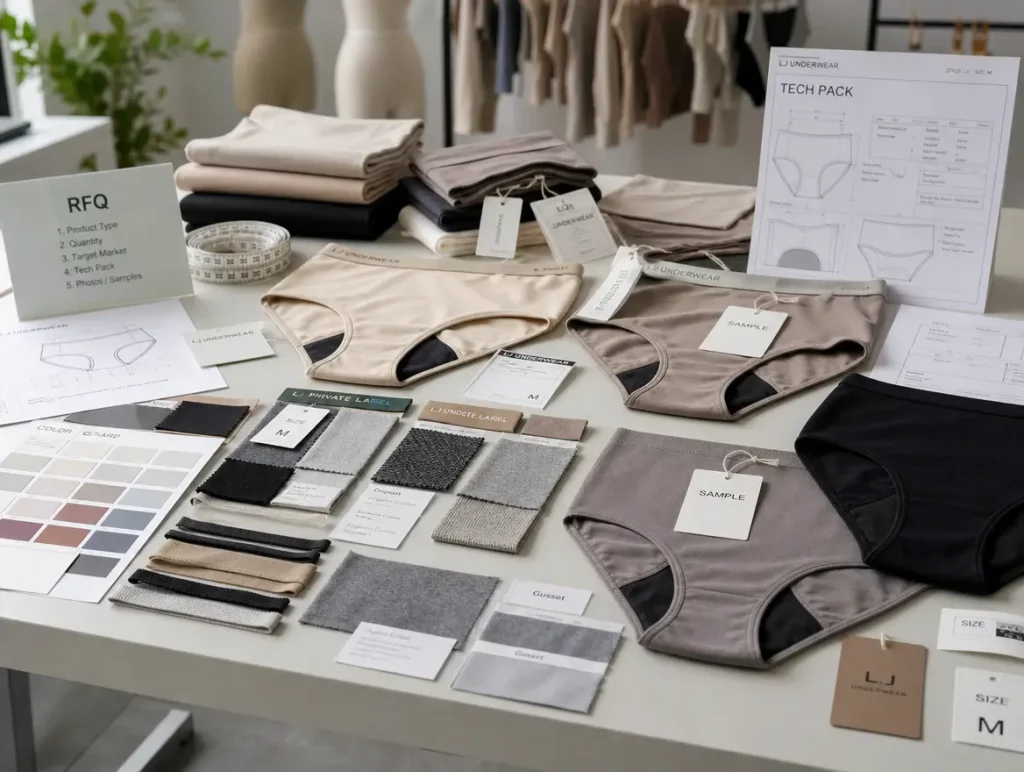
How To Submit Your RFQ
1.Send product type, quantity, and target market.
2.Attach tech packs, photos, or samples.
3.Get sample, MOQ, cost, and timeline guidance.