FAQ
Answers for OEM/ODM, MOQ, sampling, materials, compliance, production, and delivery.
Procurement FAQ Finder
Find Answers by Procurement Stage
Choose a procurement category, then use the page numbers below the answers to browse the full LJUNDERWEAR FAQ library.
A clearer inquiry helps us give a more realistic sample, MOQ, and production plan.
OEM/ODM, MOQ & Sampling
Start here when you need to understand OEM/ODM development, 50 MOQ options, sample fees, sample rounds, and what should be locked before bulk production.
Yes, LJUNDERWEAR supports OEM production from buyer tech packs and can review measurements, materials, construction, labels, packaging, and feasibility before sampling.
Yes, LJUNDERWEAR supports ODM development from an idea, including product direction, fabric selection, pattern development, sample making, and revisions.
Yes, LJUNDERWEAR supports private label period underwear with branded trims, labels, packaging, absorbency options, size sets, colors, fabrics, and construction details. The final customization scope depends on the product brief and order volume.
LJUNDERWEAR sets MOQ based on the customization level, fabric, color, dyeing method, logo method, packaging, size range, and product complexity. Selected ready-developed styles can start from 50-100 pieces, while most private label programs begin at 500 pieces per style.
Yes, LJUNDERWEAR supports low-volume launches for emerging brands when selected ready-developed styles, simple branding, and essential packaging are used. This helps buyers test the market with more flexibility and less inventory risk.
Yes, MOQ can usually be split across standard sizes within the same style, color, and fabric. A practical size ratio helps brands build a more balanced first run and reduce stock risk.
Color splitting depends on fabric and dyeing requirements. Stock colors are more flexible, while custom colors usually need separate MOQ.
Yes, tiered pricing can be provided for different quantities. Larger orders usually lower unit cost because setup and material costs are spread across more pieces.
Sample cost depends on style complexity, fabric, absorbency structure, trims, pattern work, and customization level. Sampling typically takes 7-10 days depending on the style and level of customization.
Yes, LJUNDERWEAR can make samples from photos or sketches when enough product details are provided. Measurements, fabric, absorbency, and reference products help the process.
Yes, a sample can be developed from an existing product reference when legal and practical. Buyers should provide the sample, photos, measurements, and requested changes.
Yes, samples can be revised after clear feedback. Buyers should comment on fit, fabric, waistband, gusset, absorbency, stitching, labels, and packaging.
Simple private label projects may need fewer sample rounds, while fully custom products may need several revisions. Fit and absorbency changes are the most common reasons.
Yes, a pre-production sample can be made before mass production. It should confirm fabric, fit, absorbency, color, label, and packaging.
Yes, LJUNDERWEAR can suggest cost-saving options that keep the core function stable. Options may include fabric changes, simpler packaging, fewer colors, or existing patterns.
Yes, product options can be planned around a target retail price. The buyer should share sales channel, target margin, and expected landed cost range.
Fabric, color, measurements, absorbency, logo, labels, packaging, size ratio, tolerance, carton marks, delivery terms, and construction details should be locked before bulk production. Late changes can affect cost, MOQ, and schedule.
Yes, LJUNDERWEAR can support this. Approved specs can be kept for repeat orders. Buyers should also keep their own approved sample and final files.
Yes, multiple styles can be supported in one project. MOQ, sample time, and production planning may apply separately by style or material.
Yes, different tiers can be built using different fabrics, absorbency structures, trims, and packaging. This helps brands offer entry, core, and premium products.
Yes, LJUNDERWEAR can help choose a focused first SKU plan. A smaller launch can reduce inventory risk and make customer feedback easier to read.
Custom fabric, custom dyeing, certified materials, higher absorbency, complex sewing, premium packaging, testing, and urgent lead time can increase cost. These should be discussed early.
Sample fee deduction can be discussed before the project starts. The decision depends on sample complexity, order quantity, and agreed terms.
Yes, LJUNDERWEAR can support repeat orders and product updates. Stable specs help reorders, while customer feedback can guide upgrades.
The fastest way is to send clear specs, reference photos, quantity, fabric preference, absorbency target, logo needs, packaging details, and timeline. Fast feedback also shortens development time.
Yes. LJUNDERWEAR can share relevant silhouettes, construction options, and customization routes after reviewing the product brief. The catalogue is a starting point; final suitability depends on the required fit, absorbency, materials, branding, and order plan.
Sample MOQ depends on whether you select an existing style, request a modification, or commission a new development. LJUNDERWEAR will set out the sample quantity, fee, development stage, and approval purpose in the sample quotation.
Yes. Private-label development can cover the silhouette, colorway, print, waistband treatment, and construction details. LJUNDERWEAR confirms the color standard, print method, colorfastness requirement, MOQ, artwork requirements, and sampling charges before production.
Buyer Fit & Procurement Planning
These questions help brands, retailers, wholesalers, and e-commerce sellers decide whether LJUNDERWEAR is the right period underwear manufacturer for their launch plan.
At LJUNDERWEAR, We usually support period care brands, underwear brands, retailers, wholesalers, importers, and e-commerce sellers. The best fit is a buyer who needs OEM, ODM, or private label production with clear product goals.
Yes, we can help a new brand choose a practical first product. The decision should consider target customer, price point, MOQ, absorbency level, and launch channel.
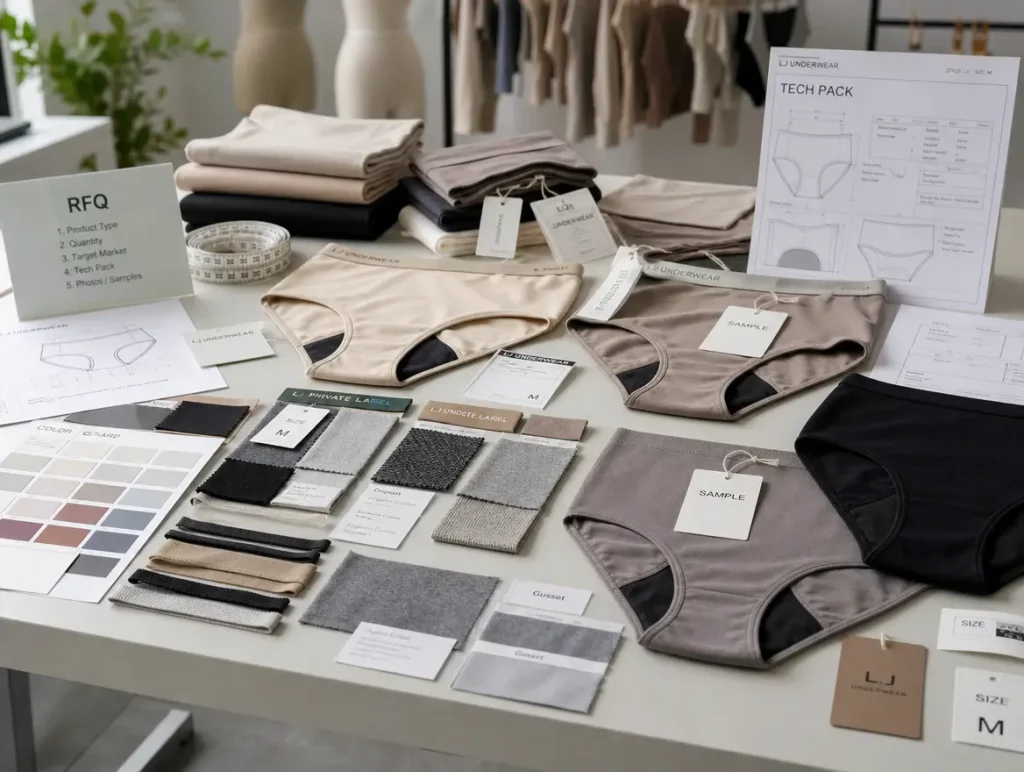
Buyers should include product type, target quantity, target market, absorbency needs, fabric preference, certification requirements, customization details, packaging needs, and target lead time. A clear RFQ helps LJUNDERWEAR quote more accurately and move faster.
We help buyers compare complexity, MOQ, cost, and customer fit before sampling. A proven base style with controlled customization is often safer for the first order.
Yes, a startup can start with product references, customer needs, and basic specifications. The factory can help turn those details into a sample direction.
Yes, LJUNDERWEAR can support Amazon, Shopify, and cross-border sellers. Product selection, packaging, barcode labels, size ratios, and shipment preparation can be discussed together.
The buyer should describe comfort issues, leak concerns, washing problems, sizing complaints, and use scenarios. Clear customer pain points help the factory improve the product more precisely.
Yes, customer reviews can guide improvements in fit, waistband comfort, absorbency, fabric softness, gusset placement, and packaging. The more specific the feedback, the better the revision.
Complaints about leaking, bulkiness, tight waistbands, rolling edges, slow drying, odor, and wrong sizing are especially useful. These issues can be linked to construction, fabric, or sizing changes.
Yes, we can help turn negative reviews into practical upgrade points. The factory can review whether the issue comes from material, fit, absorbency, sewing, or care instructions.
Yes, the supplier can compare the current product with the desired upgrade. The review can cover fabric, absorbent layers, fit, gusset length, stitching, packaging, and price.
Buyers can reduce risk by starting with proven styles, available fabrics, clear size ratios, and simple packaging. Approving a pre-production sample before bulk production is also important.
Yes, we can help plan a focused launch collection. A practical launch may include core colors, two absorbency levels, and a manageable size range.
A new brand should usually start with fewer SKUs and stronger product positioning. Too many colors, sizes, and absorbency levels can create inventory pressure.
Yes, competitor products can be used as references for direction, but the final product should be original. The factory can help convert references into custom specifications.
We compare material options, absorbency structures, construction complexity, and packaging choices. The goal is a product that customers like and the brand can sell profitably.
Fit, fabric softness, absorbency, leak protection, drying speed, waistband comfort, and accurate sizing affect satisfaction the most. Packaging and care instructions also shape the customer experience.
Yes, products can be adjusted for teens, plus size users, postpartum users, athletes, and light incontinence users. Each group needs different fit, coverage, and communication.
Yes, we can help a brand expand from one SKU into a full line. Expansion can include more absorbency levels, teen styles, swimwear, postpartum products, and incontinence underwear.
Buyers should share target country, customer age, body type, price point, sales channel, compliance needs, and product claims. This helps the factory choose better materials and construction.
Yes, product positioning can be adjusted for Amazon, Shopify, boutiques, wholesale, or retail chains. Each channel may need different packaging, price points, and documentation.
We can support reorders, product upgrades, new colors, new fabrics, seasonal products, and new category development. Stable specs and clear forecasts make repeat cooperation easier.
Yes, sizing can be improved after customer feedback. Buyers should share return reasons, review comments, body measurements, and fit photos when possible.
Buyers should test fit, absorbency, washing, drying, waistband comfort, gusset position, and size communication. These checks help reduce returns and complaints.
Yes, we can discuss soft skin-contact fabrics and cleaner material directions for sensitive-skin positioning. Any specific skin claim should be supported by suitable documentation.
A buyer should match claims to tested performance and actual use cases. Exact absorbency, PFAS-free, odor-control, or sensitive-skin claims should be supported before marketing.
Yes, repeat purchase potential can be improved through comfort, reliable absorbency, clear sizing, durable washing performance, and consistent quality. A product that solves a real issue is easier to reorder.
Soft fabric, smooth seams, stable fit, discreet protection, clean packaging, and reliable washing performance make the product feel premium. Premium does not only mean expensive fabric.
Yes, we can help brands prepare technical details such as fabric composition, absorbency logic, testing direction, and care instructions. Clear information helps customers understand the product.
The best way is to send product goals, reference images, target market, quantity, fabric preference, absorbency target, packaging needs, and timeline. A complete inquiry helps the team respond with a realistic plan.
Subject to production schedules, confidentiality, and site policies, LJUNDERWEAR can discuss a virtual factory tour or a visit. The format can cover the relevant production area, sample development, quality-control process, and documentation workflow without exposing other customers' confidential information.
Fabrics, Materials & Skin Contact
Use this section to compare cotton, modal, bamboo, recycled fibers, skin-contact layers, color, GSM, shrinkage, and material choices for private label period underwear.
At LJUNDERWEAR, We can discuss cotton, modal, bamboo blends, nylon, recycled fibers, and other stretch fabrics. The best choice depends on comfort, absorbency, drying speed, MOQ, and price.
Yes, LJUNDERWEAR can support this. Cotton or cotton-blend period underwear can be developed. Cotton is often chosen for softness and familiar skin feel, but drying speed and shrinkage should be reviewed.
Yes, bamboo or bamboo-blend fabric can be discussed. Buyers should compare softness, cost, pilling risk, drying speed, and certification needs before choosing it.
Yes, modal and micromodal options can be discussed for a softer handfeel. They are often suitable for brands that want comfort-focused everyday products.
Yes, TENCEL or similar cellulosic fabrics can be considered when available. Buyers should confirm performance, MOQ, and documentation before sampling.
Yes, recycled nylon or recycled polyester can be discussed for sustainable product lines. Buyers should confirm certification, claim wording, and material availability.
Fabric weight is chosen by balancing softness, opacity, stretch recovery, drying speed, durability, and cost. A heavier fabric may feel premium but can affect drying and breathability.
Yes, we can discuss sourcing fabrics in a target GSM range. Availability, color, MOQ, and price should be confirmed before sampling.
Buyers should confirm composition, GSM, stretch, color, handfeel, shrinkage expectation, lining material, absorbent layer, and waterproof layer. These details affect performance and pricing.
Yes, LJUNDERWEAR can support this. Fabric swatches can be discussed before sample development. Swatches help buyers review touch, stretch, thickness, color, and opacity.
Yes, the skin-contact gusset can be made with cotton or cotton-blend material. The lining should be matched with the absorbent core and washing requirements.
Yes, fragrance-free or additive-free skin-contact directions can be discussed. Buyers should define the exact claim and documentation needed before production.
Yes, LJUNDERWEAR can discuss zero-additive skin-contact fabric positioning when suitable materials are available. The claim should be backed by material records or testing if used in marketing.
Yes, antibacterial finishes can be avoided if the buyer wants a cleaner material direction. The product claim should clearly reflect the final material choice.
Yes, antibacterial or odor-control options can be discussed when suitable materials and testing support them. Buyers should avoid unsupported claims.
Yes, we can compare these fabrics by softness, stretch, drying speed, cost, pilling risk, and customer positioning. The final choice should match the brand's target user.
The best premium handfeel depends on the brand's positioning. Modal, micromodal, bamboo blends, and soft nylon blends are common options, but they should be tested in sample form.
Quick-dry period underwear usually needs suitable synthetic or performance blends and a compatible absorbent core. The entire layer system affects drying, not only the outer fabric.
Breathable summer styles usually need lighter body fabric, comfortable lining, and a balanced absorbent structure. The fabric should not become transparent or unstable after washing.
Winter or fuller-coverage products can use slightly heavier fabrics, high-waist shapes, or boyshort construction. Comfort and drying speed should still be considered.
Yes, LJUNDERWEAR can help reduce pilling risk by reviewing fiber content, yarn quality, fabric construction, and finishing. Sample testing is still important before bulk production.
Yes, sagging can be reduced through better stretch recovery, suitable fabric weight, proper elastic, and correct pattern design. Wash testing helps confirm stability.
Yes, LJUNDERWEAR can work toward a requested handfeel using swatches and sample approval. Buyers should approve the actual material before bulk production.
Yes, shrinkage can be controlled by fabric selection, pre-production testing, and clear care instructions. Buyers should confirm acceptable shrinkage tolerance before production.
Yes, stretch recovery can be checked before bulk production. Good recovery is important for fit, waistband stability, and long-term wear.
Yes, LJUNDERWEAR can support this. Colorfastness can be checked for dark, nude, and custom-dyed fabrics. This is important for intimate apparel that is washed repeatedly.
Yes, nude shade development can be discussed for different markets. Buyers should provide color references or Pantone targets and allow lab-dip confirmation.
Yes, LJUNDERWEAR can support this. Custom colors can be developed when MOQ and fabric availability allow it. Lab dips should be approved before bulk fabric production.
LJUNDERWEAR: Custom colors often require higher MOQ because dyeing mills have minimum batch requirements. Stock colors are usually more flexible for smaller orders.
Yes, LJUNDERWEAR can support this. Lace can be used in suitable period underwear designs. Lace should not reduce comfort, durability, or leak-proof performance.
Yes, mesh or breathable panels can be added when the structure allows it. The design should not weaken fit stability or leak protection.
Seamless or bonded options can be discussed for smooth-look products. Functional absorbent structures must still remain stable inside the garment.
Yes, fabric choice affects absorbency speed, comfort, drying, and leak experience. The lining, absorbent core, and waterproof layer must work together.
Yes, fabric choice directly affects customer reviews on softness, breathability, washing, pilling, and comfort. It is one of the most important product decisions.
Yes, we can help choose materials for teen products. Teen styles often need soft, breathable, easy-care fabrics with stable fit and clear absorbency.
Yes, plus size products may need stronger stretch recovery, wider waistbands, and stable body fabric. The material must support comfort and coverage.
Yes, postpartum products can use softer fabrics, flexible waistbands, and gentle skin-contact layers. The product should avoid unnecessary pressure.
Yes, sport period underwear can use stretch, moisture-management, and stable recovery fabrics. Gusset placement and waistband support are also important.
Yes, period swimwear needs swim-appropriate stretch, opacity, chlorine resistance, drying speed, and comfortable lining. The fabric system is different from daily period underwear.
Yes, softer waterproof layer options can be discussed. The final feel should be checked in a complete sample because the full layer system matters.
Yes, stable waterproof layer options can be selected, but wash durability should be tested. Care instructions also affect long-term performance.
Yes, LJUNDERWEAR can support this. PFAS-free leak-resistant materials can be discussed when available. Buyers should request testing if they need to make PFAS-free claims.
LJUNDERWEAR: Custom fabric, custom dyeing, certified materials, special trims, and waterproof layers can affect MOQ the most. Stock materials are usually more flexible.
LJUNDERWEAR: Fabric composition, GSM, absorbent core, waterproof layer, lace, elastic, certification, and dyeing method can affect price. Higher performance materials usually cost more.
LJUNDERWEAR: Buyers should approve fabric composition, handfeel, stretch, weight, color, lining, absorbent layer, waterproof layer, test needs, and care instructions. Once approved, changes may affect cost and timeline.
Leak-Proof Technology & Product Engineering
This section explains absorbency, gusset construction, leak-proof layers, quick-dry needs, plus size engineering, teen styles, swimwear, and incontinence product logic.
At LJUNDERWEAR, We use a layered construction that can combine skin-contact lining, absorbent core, leak-resistant layer, and outer fabric. The exact structure depends on the target absorbency and product style.
Yes, LJUNDERWEAR can support this. Absorbent layer count can be customized. More layers may increase capacity, but they can also affect thickness, drying speed, and comfort.
Yes, LJUNDERWEAR can support this. Absorbency targets can be discussed by milliliter. Buyers should confirm test method and claim wording before using exact numbers publicly.
Yes, LJUNDERWEAR can make different absorbency levels. Each level should have a matching structure, test direction, and customer-facing explanation.
LJUNDERWEAR: Heavy flow underwear usually needs stronger absorbent material, longer gusset coverage, and reliable leak-resistant backing. The design must balance capacity with comfort.
Overnight period underwear often uses extended front or back coverage and higher absorbency. Fit stability is important because users move while sleeping.
Yes, LJUNDERWEAR can support this. The gusset can be extended for full-back protection. This is useful for overnight, postpartum, plus size, and heavy flow styles.
Yes, thinner protection can be developed with suitable absorbent materials and layer placement. There is always a tradeoff between thinness and total capacity.
Yes, LJUNDERWEAR can work to reduce bulk by adjusting material thickness, layer shape, and gusset construction. The product still needs to meet the required absorbency.
LJUNDERWEAR: Side leakage is controlled by gusset width, layer placement, leg opening fit, absorbency speed, and body coverage. Fit testing is important for real-use protection.
Waistband design affects comfort, fit stability, and movement performance. A waistband that rolls or shifts can reduce customer satisfaction even if absorbency is good.
Yes, LJUNDERWEAR can engineer sport period underwear for movement, stability, leak protection, and anti-chafe comfort. It can be developed for active categories such as cycling, training, yoga, and dance.
Yes, LJUNDERWEAR can support this. Backup-use products can be designed with thinner absorbency. They are suitable for use with cups, tampons, or light spotting.
Yes, LJUNDERWEAR can support this. Pad-free use can be supported when absorbency and leak protection match the intended flow. Claims should be clear and backed by testing.
Yes, LJUNDERWEAR can support this. Teen period underwear can use softer waistbands, modest coverage, lighter structures, and easy-care materials. Comfort and confidence matter more than complicated features.
Yes, plus size products often need adjusted grading, fuller coverage, stronger waistband stability, and extended gusset placement. Fit testing is especially important.
Yes, high-waist styles can be built for comfort rather than compression. Fabric stretch, rise height, and waistband softness should be controlled.
Yes, LJUNDERWEAR can support this. Thong or bikini period underwear can be engineered for light flow or backup protection. They are not usually suitable for high absorbency claims.
Yes, boyshorts can offer more coverage and stable placement. They are useful for heavy flow, overnight, teen, and plus size product lines.
Absorbency speed affects whether liquid is pulled away quickly enough during use. Slow absorption can cause discomfort or leak risk even if total capacity is high.
Yes, LJUNDERWEAR can support this. Absorbency speed can be checked during sample evaluation. Buyers should define whether they need internal testing or formal third-party test data.
Yes, leak-proof performance can be tested before production. The test should match the intended use, such as daily wear, overnight, sport, or swimwear.
Yes, wash durability can be considered through material choice, lamination quality, stitching, elastic, and care instructions. Wash-cycle testing helps confirm performance.
Yes, LJUNDERWEAR can support this. Product tiers can use different absorbent structures, fabrics, waistbands, and packaging. This helps brands offer entry, core, and premium lines.
Yes, it can be engineered to look like normal underwear through discreet layer placement and smooth sewing. The outer design should not reveal the functional structure.
Yes, the top lining can be selected for a drier skin feel. It must work with the absorbent core so liquid moves through properly.
Yes, breathable leak-resistant options can be discussed. The product still needs to maintain the required leak protection.
Yes, LJUNDERWEAR can support this. Discharge protection products can be developed with lighter absorbency and breathable construction. Claim wording should be different from heavy period protection.
Some absorbent and leak-proof principles can be shared with incontinence underwear. The fit, panel placement, and absorbency target should be adjusted for the use case.
Yes, men's incontinence boxer briefs need different pouch and front-panel engineering. The absorbent placement must match male anatomy and leakage patterns.
Yes, postpartum underwear can use heavier protection and extended coverage. It should also prioritize soft fabric and gentle waistband design.
Yes, maternity underwear can include leak-proof technology if needed. The pattern should allow belly growth and avoid uncomfortable pressure.
Period swimwear uses related leak-protection concepts but requires different materials and construction from daily period underwear. It must help manage light flow or backup protection without taking in external water during wear, so water-tested performance and drying speed matter.
Yes, LJUNDERWEAR can engineer period swimwear for light flow or backup protection. Stronger claims should only be used when testing supports them.
Period swimwear avoids bulk through thinner materials, controlled gusset placement, and swimwear-friendly fabric. The design must still maintain opacity and fit.
Yes, LJUNDERWEAR can develop quick-dry period swimwear with suitable swim fabrics, lining, and engineered construction. Samples should be checked for drying speed, comfort, colorfastness, and water-use performance.
Yes, LJUNDERWEAR can help provide simple technical information such as layer structure, absorbency level, care instructions, and intended use. Clear explanations reduce customer confusion.
Yes, LJUNDERWEAR can support this. Technical drawings or construction notes can be discussed for development projects. They help align sampling, production, and quality control.
Yes, approved patterns, materials, measurements, and construction notes can be kept for repeat orders. This improves consistency across batches.
Absorbency target, layer structure, gusset length, waterproof layer, lining, fit, measurements, tolerance, and care instructions should be approved. These details define the product's real performance.
LJUNDERWEAR usually uses 4-needle 6-thread flatlock stitching or an equivalent construction standard for gusset panel sewing, depending on the approved product structure and fabric.
For TPU bonding, LJUNDERWEAR usually works within an 18-25 micron range when the product structure requires TPU-based leak-resistant performance.
LJUNDERWEAR manufactures period underwear, period swimwear, teen period products, incontinence underwear, and reusable period pads for private label and OEM/ODM programs.
Sport period underwear is designed for movement, so LJUNDERWEAR focuses on stability, leak protection, and anti-chafe comfort for active categories such as cycling, training, yoga, and dance.
Sport period underwear can include a 4-layer leak-proof system, anti-odor treatment, PFAS-Free waterproof protection, and sport-grade construction to improve support, comfort, and performance in motion.
Period swimwear answers a specific consumer need while offering stronger premium positioning than conventional swimwear. For brands, it can create technical differentiation through engineered protection, swim-ready materials, and water-tested performance.
LJUNDERWEAR can develop a size range based on the target customer and measurement chart, including extended or inclusive sizing where technically feasible. Please provide the desired size range, body measurements, and fit expectations so grading, fit-sample requirements, and MOQ implications can be confirmed.
Certifications, Testing & Compliance
Review PFAS-free support, OEKO-TEX related needs, third-party testing, labeling, restricted substance documents, and claim support before confirming a market launch.
Yes, LJUNDERWEAR supports PFAS-Free testing and compliance considerations relevant to EU REACH, UK REACH, and major U.S. market requirements. Buyers should request relevant test reports before using PFAS-Free claims.
Buyers should request material information, test reports, and tested-scope details. The documents should match the product, material, or batch used for the claim.
Yes, PFAS-free claims can apply to both if the selected materials and test reports support them. Each product type should be checked separately.
Yes, LJUNDERWEAR can support this. OEKO-TEX related material requirements can be discussed when suitable certified materials are available. Buyers should confirm certificate scope and validity.
LJUNDERWEAR: Organic cotton claims can be discussed when certified materials are available. Buyers should confirm GOTS, OCS, or other relevant documentation before using the claim.
Yes, LJUNDERWEAR supports REACH and SVHC discussions for EU sales and can review EU REACH and UK REACH requirements against selected materials, trims, and product claims.
Yes, LJUNDERWEAR can support this. CPSIA-related needs can be discussed for teen products. The buyer should confirm age category, testing needs, and label requirements.
Yes, LJUNDERWEAR can arrange or discuss independent third-party testing through recognized laboratories such as SGS, Intertek, or BV when required. Independent testing strengthens product safety claims, supports PFAS-Free positioning, and helps meet retailer and market compliance expectations.
Yes, absorbency testing can be arranged if a buyer needs formal data. The test method should match the claim used on product pages or packaging.
Yes, leak-proof performance testing can be discussed. Buyers should define the scenario, such as daily wear, overnight use, incontinence, or swimwear.
Yes, hydrostatic pressure testing can be discussed for waterproof or leak-resistant layers. It may help support technical material evaluation.
Yes, wash durability testing can be arranged or discussed. Buyers should define wash cycles, washing method, and acceptance criteria.
Yes, colorfastness testing can be arranged for dark, nude, or custom-dyed colors. This is important for underwear that touches skin and is washed often.
Yes, shrinkage testing can be done before production. Results help control fit after washing and reduce customer complaints.
Yes, stretch recovery testing can be discussed. Good recovery helps maintain fit, waistband stability, and product shape over time.
Yes, LJUNDERWEAR can provide fabric composition for approved materials. Buyers need this information for care labels, product pages, and compliance files.
Yes, care label content can be supported based on the final fabric and product construction. Buyers should confirm legal label rules in their target market.
Certifications may be product-specific, material-specific, or factory-level. Buyers should confirm the exact scope before using any certificate publicly.
Yes, certificates and documents can be matched to each SKU when information is available. This matters when different fabrics, colors, or suppliers are used.
Yes, restricted substance information can be discussed for retailers or marketplaces. Buyers should provide the exact requirement or checklist.
Yes, LJUNDERWEAR can support retailer onboarding with available factory, product, material, and testing documents. The buyer should send the retailer checklist early.
Yes, social compliance documents can be discussed when buyers need supplier review. Buyers should request current valid documents during onboarding.
Yes, factory audit support can be discussed for qualified buyers. Audit timing, scope, and document requirements should be confirmed in advance.
Yes, available documentation can be reviewed before order confirmation. Some documents depend on final material selection or extra testing.
Yes, LJUNDERWEAR can help buyers avoid unsupported claims by matching wording to materials and testing. Final legal review should be handled in the buyer's target market.
These claims can be supported only when suitable materials and testing are available. Buyers should not use them without documentation.
Sensitive-skin claims should be used carefully and supported by material choices or testing. The factory can provide material information, but the buyer should confirm final claim rules.
Yes, these claims can be discussed when the material direction supports them. Documentation should be requested before printing packaging.
Sustainability claims can be supported when materials and documentation match the wording. Recycled content, organic cotton, and reusable product claims each need different proof.
Yes, LJUNDERWEAR can discuss compliance files for Amazon or other marketplaces. Buyers should provide the exact platform request because requirements can vary.
Yes, European buyers can request chemical compliance discussion before sampling. This helps avoid choosing materials that do not fit the market.
Yes, US buyers can request available documentation before bulk production. Teen products, intimate apparel, and functional claims may need special attention.
Yes, label language can be supported based on buyer-provided requirements. Buyers should confirm local regulations for fiber content, care symbols, and country of origin.
Buyers should ask about PFAS, fabric composition, absorbency testing, wash durability, colorfastness, label rules, restricted substances, and claim support. These questions reduce launch risk.
Buyers should ask about swim fabric performance, colorfastness, PFAS-free support, absorbency claims, drying speed, and labeling. Swimwear claims should not copy daily underwear claims.
Buyers should ask about absorbency, skin contact, odor-control claims, wash durability, labeling, and restricted substances. Medical-style claims should be reviewed carefully.
Test reports should be used carefully and only within their tested scope. A report for one material may not cover every SKU or finished product.
The buyer is responsible for final legal compliance in the target market. The supplier can provide production and material documents, but local compliance review is still important.
Yes, packaging claims can be checked against available documents. Claims should be revised if the documentation does not fully support them.
Buyers should confirm test reports, fabric composition, care instructions, certification scope, restricted substance documents, and claim wording. Printing before confirmation can create costly rework.
Yes, LJUNDERWEAR can provide recent inline quality control records when they are relevant to the buyer's order, audit request, or production review process.
Yes, LJUNDERWEAR can discuss finished-garment PFAS-free testing reports from independent third-party laboratories when available for the selected product, material, and production batch. Buyers may request the report details and laboratory reference information during compliance review.
Buyers can request the current OEKO-TEX Standard 100 certificate information, including certificate number, scope, and validity period. LJUNDERWEAR will confirm the applicable certificate details based on the materials and supplier records used for the project.
FDA registration under 21 CFR Part 807 may be relevant when a product is positioned or regulated as a medical device. LJUNDERWEAR can review the intended use, claims, and market requirements with the buyer before confirming whether this registration pathway applies.
LJUNDERWEAR uses AQL 2.5 as the standard inspection reference for intimate apparel quality control, unless a buyer's approved inspection protocol requires a different standard.
LJUNDERWEAR uses a three-stage quality control process: pre-production review, inline production inspection, and pre-shipment inspection.
LJUNDERWEAR covers key industry standards and compliance programs including OEKO-TEX Standard 100, GOTS, GRS, BSCI, SEDEX/SMETA, ISO 9001, ISO 14001, FDA 21 CFR 884.5435, and PFAS-Free testing.
Buyers should confirm the certificate scope, validity, issuing body, and whether the certificate matches the actual manufacturing entity. A certificate is most useful when it applies to the right product, material, and factory.
Packaging, Production & Delivery
These questions cover private label packaging, washing instructions, production lead time, inspection, shipment checks, freight forwarders, and repeat-order planning.
Yes, LJUNDERWEAR supports private label packaging for suitable bulk orders. Options can include bags, pouches, boxes, hangtags, inserts, barcode labels, and carton marks.
Yes, packaging can be designed to improve customer experience. Clear sizing, absorbency explanation, care instructions, and clean branding help buyers reduce confusion.
Yes, washing instructions can be added to packaging, care labels, or inserts. Clear instructions help protect product performance after purchase.
Yes, packaging claims should be matched with product testing and material documents. This is especially important for absorbency, PFAS-free, odor-control, and sustainability claims.
Yes, packaging can be prepared for Amazon, Shopify, or other e-commerce channels. Buyers should provide barcode, FNSKU, warning label, and carton requirements.
Yes, LJUNDERWEAR can support this. Retail packaging can be discussed for boutiques or stores. Buyers should share display method, price point, and packaging style.
Yes, discreet packaging can be used for incontinence products. Neutral wording and privacy-focused design can improve customer comfort.
Yes, bundle packaging can be made for 3-pack, 5-pack, or mixed-flow sets. Buyers should confirm product mix, size ratio, barcode, and packaging format.
LJUNDERWEAR's bulk production usually takes 25-45 days after sample approval, depending on customization, material readiness, testing, packaging, order size, and season. Final quality inspection generally takes another 2-3 days before shipment.
At LJUNDERWEAR, We control quality through material checks, cutting checks, sewing checks, measurement checks, functional review, and final packing inspection. Functional underwear needs extra attention to absorbency and leak-proof construction.
Yes, in-line and final inspection can be arranged. Third-party inspection can also be supported when required by the buyer.
Fabric, size, stitching, waistband, gusset placement, absorbent layers, leak-proof structure, labels, packaging, carton marks, and documents should be checked. This reduces shipment and receiving problems.
Yes, production updates can be provided when requested. Updates are useful during material arrival, sewing, packing, and final inspection stages.
Late sample approval, custom material delays, packaging artwork changes, testing, peak season, or late payment can delay production. Clear approvals reduce risk.
Yes, LJUNDERWEAR can work with a buyer's freight forwarder. Buyers should provide forwarder contact details, shipping terms, warehouse address, and document requirements.
Yes, LJUNDERWEAR can discuss sea, rail, air, express, and DDP shipping options. The best choice depends on destination, delivery window, quantity, and budget.
Yes, carton volume and gross weight can be estimated after packaging and quantity are confirmed. Final figures should be checked before shipment booking.
Standard export documents can be discussed based on destination and shipping terms. Buyers should confirm invoice, packing list, certificate, and customs needs early.
Yes, repeat order planning can reduce stockouts and urgent production pressure. Forecasts help the factory prepare materials and capacity earlier.
Long-term cooperation becomes more efficient with clear specs, approved samples, stable forecasts, fast feedback, and organized documentation. This helps improve sampling, production, quality, and reorders.
LJUNDERWEAR's monthly capacity is typically around 200,000 to 250,000 pieces, depending on product complexity, material readiness, order mix, and production schedule.
Yes, LJUNDERWEAR can support DDP shipment to Amazon fulfillment centers in the United States, United Kingdom, Germany, France, Italy, Spain, Japan, Canada, and Australia.
Shipping time depends on route and season. As a general reference, sea freight often takes 35-45 days, rail freight to Europe around 20-25 days, and air freight about 5-8 days.
Yes. Courier, air, rail, and sea-freight options can be discussed once the destination, shipment size, and delivery term are confirmed. The proposal should identify the Incoterm, named place, estimated transit range, and responsibility for freight, insurance, import clearance, duties, and taxes.
Need a project-specific answer?
Send your target market, quantity, size range, fabric preference, absorbency target, packaging needs, and timeline so our team can respond with a practical sourcing path.
Get Your Free Quote & Technical Review
How To Submit Your RFQ
1.Send product type, quantity, and target market.
2.Attach tech packs, photos, or samples.
3.Get sample, MOQ, cost, and timeline guidance.