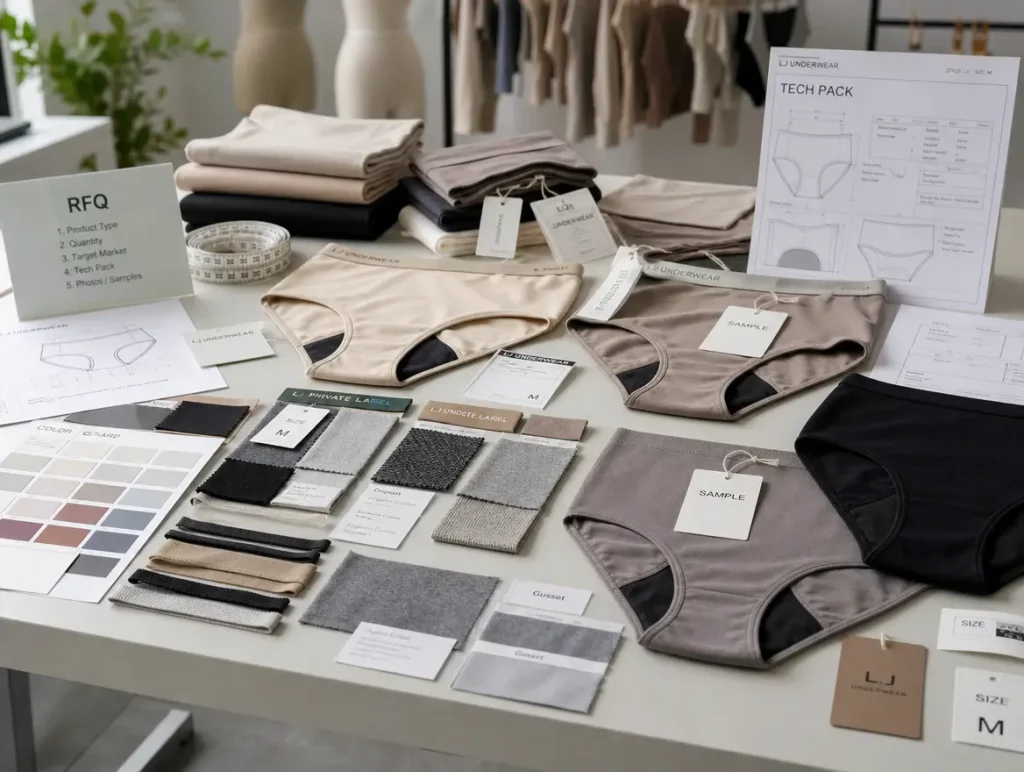
Size & fit resources
Intimate Apparel Size & Fit: Charts, Measurements, and Private-Label Guidance
Build a clearer fit direction before bulk production. Use the size chart as a development reference, measure body and sample points consistently, and validate the final block against your target market, fabric stretch, and approved PP sample.

Choose a resource
Three Practical Tools for a More Controlled Fit Process
Start with the task in front of you: planning a size range, measuring a body or sample, or selecting a private-label fit direction.

Intimate Apparel Size Chart
Waist and hip reference ranges in centimeters and inches, with development notes for extended sizing.
- XS–6XL reference
- cm and inch units
- Tech-pack override noted
How to Measure
Body and garment measurement points that help buyers compare a sample with the intended specification.
- Waist, hip, inseam, rise
- Sample point-of-measure table
- Common error checks
Private-Label Fit Guide
A decision framework for target market, stretch recovery, block selection, and PP-sample approval.
- Market input checklist
- Stretch and recovery review
- PP sample validation
Margin protection
Fit Consistency Starts Before the First Bulk Order
Returns and complaints often begin with avoidable ambiguity: an unclear target market, inconsistent measuring, or a size label carried across styles without checking the actual block and fabric.
Define the wearer and market
Confirm the intended size language, body-measurement source, style coverage, and sales market.
Measure one agreed way
Use the same points of measure and tolerance logic across tech pack, sample review, and QC.
Approve the worn result
Lock the final specification only after fabric behavior, gusset position, rise, and PP-sample fit are reviewed.
Target-market grading
One Generic Block Should Not Be Relabeled for Every Market
US, EU, and AU projects are not assigned a fixed stereotype. The useful approach is to start with the buyer’s approved measurement source and target wearer, then review the block, grading increments, fabric, and sample together.
Confirm the source chart
Provide the intended customer size chart, reference garment, return feedback, or retailer requirements.
Align label and measurement logic
Confirm whether the label follows body measurements, garment measurements, or an existing brand conversion.
Validate against the approved sample
Use the PP sample and agreed fit review to lock the market-specific specification before bulk.
Fit program workflow
From Size Direction to an Approved Production Specification
The output is not just a chart. It is an agreed chain of measurements, sample decisions, and production checks.
Review the brief
Target market, product category, size range, support or compression direction, fabric, and available reference files.
Select a starting block
Choose the closest practical route and identify where pattern or grading adjustment may be required.
Measure and fit the sample
Compare points of measure, stretch recovery, gusset position, rise, and comfort against the brief.
Lock the PP specification
Record the approved measurements and tolerances used for bulk and AQL-focused inspection.
Start with your specification
Need a Fit Direction for a New Private-Label Line?
Send the target market, intended size range, product type, reference chart or garment, fabric direction, and any available tech pack. A 72-hour feasibility review may be available for selected prepared briefs.
Frequently asked questions
Size & Fit FAQ
Are the charts on this page final consumer size charts?
No. They are development references. The approved tech pack, target-market label plan, material route, and PP sample control the final measurements, grading, and tolerances.
Which files should we send for a fit review?
Send the product category, target market, intended size range, reference chart or garment, fabric direction, fit feedback, and any available tech pack. This gives the review a clear starting point.
Can one size chart work across all intimate-apparel categories?
No. Briefs, bras, shapewear, sports bras, maternity styles, sleepwear, and seamless garments use different points of measure and fit logic. Start with the relevant category and confirm the approved PP sample.
When is the fit specification ready for bulk production?
Bulk should begin after the project-specific PP approval records the agreed measurements, tolerances, material behavior, labels, construction, and review status.
Get Your Free Quote & Technical Review
How To Submit Your RFQ
1.Send product type, quantity, and target market.
2.Attach tech packs, photos, or samples.
3.Get sample, MOQ, cost, and timeline guidance.