
Construction-led OEM & ODM
Custom Seamless Underwear Manufacturer
For lingerie, shapewear and activewear brands
As a seamless underwear manufacturer, LJUNDERWEAR develops custom bras, panties, shapewear and sports compression shorts around the intended fit, support, body mapping and edge finish. Circular-knit, clean-edge and hybrid routes are reviewed by product so your team can define what each sample must prove before bulk approval.
Bras, panties, shapewear and sports compression shorts can share a seamless manufacturing direction while using different support zones, openings, edge finishes and validation plans.
Capability overview
Custom Seamless Underwear Capabilities: Bras, Panties, Shapewear & Compression
A useful specification names the body construction, support intent, edge method, lining or gusset, target market and validation plan. The right route can be circular knit, clean edge or hybrid; “no-show” and “invisible” are not complete technical instructions.
Circular-Knit Body
Use tubular construction and mapped zones where the product function supports them.
Clean-Edge Construction
Specify each waist, leg, neckline or opening finish and its approval method.
Added Structure Where Needed
Add panels, linings, gussets or components when the seamless body cannot carry the function alone.
Product-use matrix
Which Seamless Product Types Fit Your Collection?
The range can share a manufacturing theme while each product keeps its own fit, support, edge and approval decisions.
| Product route | Likely construction | Confirm in development | When to change route |
|---|---|---|---|
| Seamless panties and briefs | Tubular-knit or clean-edge body with a separately specified gusset | Rise, back coverage, leg opening, waistband, gusset and edge recovery | Use panels where functional layers or shaping geometry require them; review Custom Panties |
| Seamless bras and bralettes | Knit-in band, cup and support zones, with straps or components added where required | Band stability, neckline, strap route, cup shaping, activity level and recovery | Use cut-and-sew for underwire or structured cups; compare Seamless Sports Bras |
| Seamless shapewear | Body-mapped knit zones or clean-edge construction for shaping briefs, shorts and selected bodysuits | Control level, zone placement, roll-up, opening pressure, movement and breathability | Use hybrid panels where stronger or directional control cannot be held by the knit body alone |
| Sports and compression shorts | Tubular or mapped knit body with a controlled waistband, leg openings and ventilation zones | Compression intent, squat and movement review, waistband stability, recovery, opacity and chafing points | Use engineered panels or a hybrid route where pocket, gusset or directional-support placement requires it |
| Functional hybrid pieces | Seamless or clean-edge body combined with required lining, gusset or panels | Layer attachment, edge transition, function zone and wash route | Keep function-led claims on the applicable product page |


If the range also needs separate block and grading decisions, use the Custom Plus-Size Lingerie route rather than transferring one seamless sample across every size zone.
Construction anatomy
How Will Your Seamless Garment Be Built?
A circular-knit garment begins with a tubular body, but the finished product is controlled through more than one knitting step. The brief should connect the yarn article, knit-program revision, body measurements, functional zones, openings and secondary operations to the same approved sample.
Support, ventilation and shaping zones can be created by changing stitch structure or elastic participation within the body. Those changes still need a recorded position, transition and size route. A seamless body may also require cut openings, straps, gussets, linings, bonding, sewing or label application before it becomes a finished garment.
Confirm the Product and Size Plan
Start with intended use, target measurements, base sizes, support or control direction and the openings or components the finished style needs.
Approve the Knit Program and Body
Record the approved yarn article, body dimensions, stitch-zone placement and program revision. Do not treat a material name as a complete construction specification.
Specify Openings and Added Parts
Specify every cut, bond, sewn attachment, strap, gusset and lining. Check that these operations do not distort the tubular body or move a mapped zone.
Approve the Finished Sample
Condition the finished sample, review measurements and movement, then link accepted findings to the exact material set, construction revision and PP sample.

Construction comparison
Should You Choose Seamless or Cut-and-Sew?
Neither route is a universal winner. Select the construction that can deliver the intended support, edge, function and repeatable approval record.

Define the tubular body, mapped zones and knit revision before openings and added components are completed.

Pattern pieces, elastic and reinforcement follow a defined operation sequence when structured or directional support is required.
| Decision | Seamless / circular knit | Cut-and-sew / paneled |
|---|---|---|
| Base construction | Tubular knit body with reduced body seams | Patterned panels joined in a defined sequence |
| Support route | Knit structure, bands and mapped zones | Panels, cups, underwire, boning or reinforcement |
| Edge options | Knit edge, bonded finish or specified cut edge | Sewn hem, binding, elastic or bonded component |
| Best matched to | Panties, soft-support bras, selected shapewear and sports compression shorts | Structured bras, engineered panels and function-led constructions |
| Typical review risk | Recovery, zone placement, rolling and edge durability | Seam bulk, panel alignment, stitch comfort and component load |
| Development record | Knit/construction specification plus finished-sample checks | Pattern, BOM, operation details and finished-sample checks |
Specification framework
What Should You Confirm Before Sampling?
Material names alone do not define stretch, recovery, opacity, edge behavior or finished-product fit. Record the exact supplier article and approved sample behind each decision.
Product and Market Direction
- Product family and intended use
- Target wearer and market
- Style, color, size and quantity plan
Material and Construction
- Yarn article and knit identity
- Program revision and body mapping
- Edges, gusset, lining and added parts
Fit and Validation
- Stretch and recovery method
- Base sizes, grading and sample sizes
- Acceptance criteria and review record
Brand and Bulk Lock
- Color, label, trim and packaging
- Care route and substitution controls
- BOM and PP sample reference
| Field group | Information to record | Approval focus |
|---|---|---|
| Product use | Product family, target wearer, intended use, support or control intent | Named route and market |
| Yarn / material | Supplier reference, full composition, knit construction, weight or comparable identity fields | Exact approved article |
| Knit program / revision | Program identity, body measurements, mapped-zone location and approved revision | One controlled construction reference |
| Stretch / recovery | Direction, measurement method, tolerance and sample condition | Agreed method and result |
| Body mapping | Support, ventilation or control zone position and transition | Fit and movement review |
| Edges / components | Waist, leg, neckline, straps, gusset, lining, bond or sewn attachment | Construction and durability |
| Fit architecture | Target market, block or measurement source, base sizes, grading and selected samples | Recorded size route |
| Validation plan | Sample condition, review method, acceptance criteria, owner and record format | Repeatable approval evidence |
| Brand execution | Color, label, trim, packaging, care route and substitution controls | Approved BOM and PP sample |
| Commercial inputs | Style/color/size breakdown, quantity, required documents and target date | Project-specific quotation |
Intimate Apparel Fabric Guide: fiber, knit and supplier records.
Private-Label Fit Guide: market, grading and sample evidence.
Risk and approval control
What Must Pass Before You Approve Bulk Production?
Each risk needs a named review method tied to the exact sample and revision. Generic comfort or invisibility language cannot replace that record.
How Will You Decide Whether the Sample Passes?
A useful approval plan names the sample condition, direction or body area, review method, acceptance criteria, responsible reviewer and record format. This prevents a statement such as “good recovery” or “no-show” from being approved without a repeatable basis.

| Validation item | Method to define | Approval record |
|---|---|---|
| Stretch and recovery | Direction, reference length, conditioning, measurement sequence and tolerance | Named sample, result and revision |
| Dimensional change | Care route, measurement points and comparison condition | Before-and-after measurement sheet |
| Zone placement | Body position, target size, transition point and movement review | Fit notes tied to the zone map |
| Roll-up and openings | Waist or leg geometry, movement sequence and intended outer garment | Selected-size wear findings |
| Edge durability | Exact cut, bond or sewn finish, material combination and care condition | Appearance and construction review |
| Visibility / no-show | Style, color, outer fabric, lighting and movement scope | Qualified claim for the approved combination |
Will the Garment Recover After Stretch?
Record the agreed stretch/recovery method and compare the named sample before and after conditioning.
Are the Support Zones in the Right Place?
Check mapped zones on the intended body and size rather than approving a flat garment only.
Will the Waist or Leg Roll Up?
Review movement, opening pressure, hem geometry and the intended outer garment.
Will the Edge Hold Through Care?
Use the selected fabric, finish and care route for the project-specific validation.
What Does the No-Show Claim Cover?
Scope the claim to the approved style, edge, color and outer-fabric review.
Does the Product Need More Structure?
Move to a paneled or hybrid route when a bra, shaping style or compression short requires directional or structured support.
PP sample approval
How Is the PP Sample Approved Before Bulk?
Move from the buyer brief to one locked reference in a recorded sequence. Each gate should close the relevant construction, fit and evidence questions before bulk release.
Confirm the Use Case
Product, wearer, function and target market.
Confirm the Construction
Body, zones, edges and added components.
Approve the Selected Sizes
Measurements, balance, movement and selected sizes.
Check Wash and Wear
Recovery, edge, comfort and revision findings.
Lock the PP Sample
Specification, BOM, evidence and open-point closure.
Which Reports Apply to This Material and Style?
The LJUNDERWEAR Certifications page publishes ISO 9001:2015 certificate 62726Q00153R001 and ISO 14001:2015 certificate 62726E00103R001 for management-system review. It also lists OEKO-TEX STANDARD 100 certificate 26.HCN.12213, held by Shenzhen Ljvogues Sports Fashion Limited with a defined period-panty scope, and Eurofins PFAS report EFW726020391 for a tested TPU waterproof barrier film used in menstrual underwear.
Use the applicable records positively when the named holder, scope, tested item, date and proposed buyer-facing claim match the project. For plain seamless bras, panties, shapewear or compression shorts, request the relevant yarn, material and component evidence rather than transferring a period-care document by product name. Factory-process questions can be reviewed through the Factory Overview.
Manufacturer context
How Does LJUNDERWEAR Manage a Seamless Program?
LJUNDERWEAR connects each seamless project to a named construction route, controlled material references, selected-size review, PP-sample approval and a locked bulk reference. This creates one traceable development path across bras, panties, shapewear and sports compression shorts without treating every product as the same build.
For the company background behind this development approach, review the LJUNDERWEAR story.
Prepare the project
What Should You Send for a Seamless Development Review?
The first review should identify the feasible route, missing information and approval sequence before project-specific MOQ, sampling, timing or size commitments are issued.
What Your Team Should Send
What We Review With You

How Will Bulk Match the Approved Sample?
Bulk control should compare production with one locked reference set rather than rely on the product name alone. Record the approved knit or construction revision, material articles, measurements, mapped-zone positions, secondary operations, branding and packaging before release.
If a yarn, program, color lot, component or finishing method changes, identify the affected requirement and decide whether a new sample or partial reapproval is needed. The change should be closed before the revised route becomes the production reference.
Sample stages and approval responsibilities should be recorded against the named prototype and PP sample. Commercial terms remain tied to the selected style, construction, materials, quantities and open development points.
Buyer FAQ
Seamless Underwear Manufacturing FAQ
These answers define the development route. Final construction, commercial terms and evidence still follow the approved project.
What is a custom seamless underwear manufacturer?
A custom seamless underwear manufacturer develops bras, panties, shapewear and sports compression shorts through tubular-knit, clean-edge or hybrid construction and controls the specification, sampling and bulk approval route. The exact process depends on the product function, materials, components and target market.
How is seamless underwear made?
A circular-knit route forms a tubular garment body and can vary stitch structure across selected support, ventilation or control zones. Openings, straps, gussets, linings and edge finishes may still be cut, bonded, sewn or otherwise added according to the approved style.
Are seamless garments completely free of seams?
No. Seamless commonly means the main body is knitted as a tube or developed with fewer body seams. Necklines, straps, gussets, linings, cups, openings and bonded or sewn attachments may still be added. The brief should name each construction and edge rather than use “seamless” as a universal claim.
How are sizes and grading controlled in circular-knit underwear?
Sizes are controlled through the approved body measurements, knit-program or construction revision, zone positions and finished-garment tolerances for the selected size route. Brands should approve named sizes and record where components or functional zones change instead of assuming one proportional scale works across the range.
Which products can use seamless construction?
Bras, bralettes, panties, briefs, shaping garments and sports compression shorts can use seamless or clean-edge construction. Structured cups, underwire, pockets, directional control or layered functions may require cut-and-sew operations or hybrid panels.
What is the difference between seamless and cut-and-sew underwear?
Seamless construction commonly starts with a tubular knit body or reduced-seam route, while cut-and-sew construction joins patterned panels. Seamless can support comfort-led and soft-support briefs; cut-and-sew can provide more control over structured cups, panels and reinforcement. The intended function should decide the route.
Can bonded or laser-cut edges be used on seamless underwear?
They may be considered where the selected fabric, geometry and product brief support them. The project should name the edge method and validate appearance, roll-up, bond or cut stability and care behavior on the finished sample rather than promise one result for every material.
What information is needed for a seamless underwear quotation?
Provide the product type, intended use, reference sample or tech pack, construction and edge direction, material preference, body-mapping need, target market, size plan, quantity by style, color and size, required documents and target date. LJUNDERWEAR can then identify missing inputs and confirm project-specific terms.
Prepare the next decision
Request a Seamless Development Review
Tell us whether you are developing a seamless bra, panty, shaping garment or sports compression short, then send the use case, reference, construction direction, material preference, size plan, quantities and required evidence. LJUNDERWEAR can identify the feasible route before sampling and quotation.
Prefer email? info@ljunderwear.comGet Your Free Quote & Technical Review
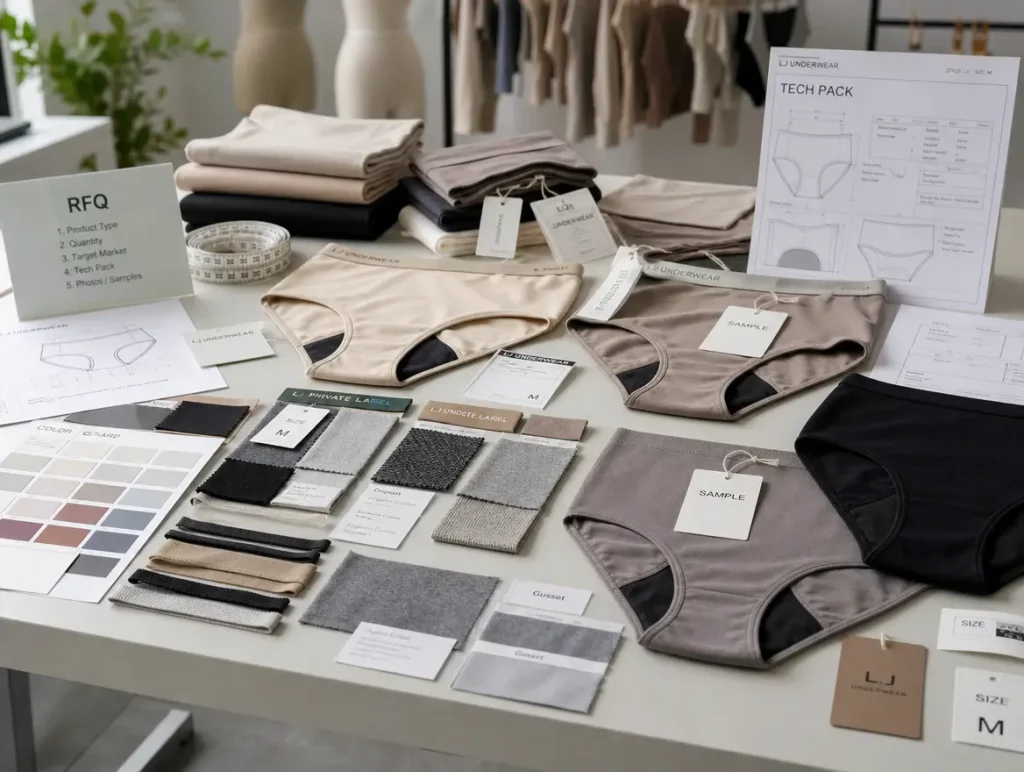
How To Submit Your RFQ
1.Send product type, quantity, and target market.
2.Attach tech packs, photos, or samples.
3.Get sample, MOQ, cost, and timeline guidance.