Industry Insights / Buyer decision hub
Period Underwear Development Insights for OEM Buyers
This section collects LJUNDERWEAR development insights for period underwear brands, covering material specifications for swim and active use, fit failure modes in yoga and running, and how to test an extended-size opportunity before sampling. Each guide connects one product-line decision to category-specific evidence and a reviewable PP-sample gate rather than repeating general OEM service claims.
At a glance / Product-line choice
Period Underwear Product Line Development: What Decisions Should Buyers Make Before Sampling?
These insights are for buyers evaluating a new period underwear product line, not end consumers learning how the product works. Start by defining the use case, target wearer and approval risk. Then confirm whether the manufacturing route can produce a traceable sample record—not simply a capacity statement or price. A visit to the factory capability overview can establish context, while the guide for your category defines what must be approved.
Four decision paths / Read the matching guide

Period Swimwear Material: Why Wet-Use Specs Differ from Underwear
Chlorinated water, UV exposure, water intake and wet stretch create approval questions that a standard underwear specification does not answer. Review wet-fit and relevant material-evidence scope before PP approval.
Read the swimwear guide
Period Underwear for Running: What Motion Testing Reveals Before Bulk
Impact and repeated movement can expose gusset shift, friction and layer noise that remain hidden in a standing fitting. Define one reproducible motion panel for the exact PP revision.
Read the running guide
Yoga Period Underwear Fit: Where Visible Failures Start
Visible panty lines, gusset gap and waistband roll may appear only through flexion. Compare standing, squat and forward-fold observations against the approved silhouette and edge route.
Read the yoga fit guide
Plus-Size Period Underwear Market: How to Test the Opportunity
Treat market opportunity as a hypothesis. Connect dated demand signals to grade rules, representative size-band fit records and a version-controlled PP sample before expanding the range.
Read the extended-size guideDecision router / Buyer stage
Which Period Underwear Development Stage Are You In?
Use the four category cards above for the technical guide. Use this router for the adjacent commercial, material or fit decision that usually comes next.
| Stage | Buyer question | Recommended next step | Why this route |
|---|---|---|---|
| 1. Market evaluation | Should we enter this category? | Read the extended-size opportunity framework above, then review the Low MOQ pilot route. | Validate demand, fit complexity and unit economics before expanding a range. |
| 2. Material and spec planning | Which material risks need evidence? | Choose the matching category guide, then compare base fabric routes. | The use case determines which material questions and evidence scopes matter. |
| 3. PP sample approval | What should be locked at PP? | Use the guide above, then follow the sampling and development workflow. | PP gates differ by wet use, motion, flexion and size-band fit. |
| 4. Pre-bulk QC | How do we control fit consistency? | Apply the category gate, then approve the right base block. | Grade rules, POM, tolerances and the PP reference must remain connected. |
Next questions / Supporting records
Related Resources for Period Underwear Specification and Fit Decisions
Move from category choice to fit, care, documentation and real development decisions without repeating the same destination.
Frequently asked questions
Period Underwear Development Insights FAQ
Buyer-level answers that apply across product categories; use the four guides above for category-specific approval detail.
How should an OEM buyer choose a development route for a new period underwear product line?
What should I include in a period underwear tech pack?
How long does OEM period underwear development take from sampling to bulk?
What's the difference between developing period underwear for different activities?
What evidence should I request before approving bulk production?
Turn the Product-Line Decision into a Reviewable Development Brief
Send the intended use, target market, size strategy, reference product and available tech pack. LJUNDERWEAR can review the development inputs and identify which commercial, fit or evidence items still need project-specific confirmation.
Get Your Free Quote & Technical Review
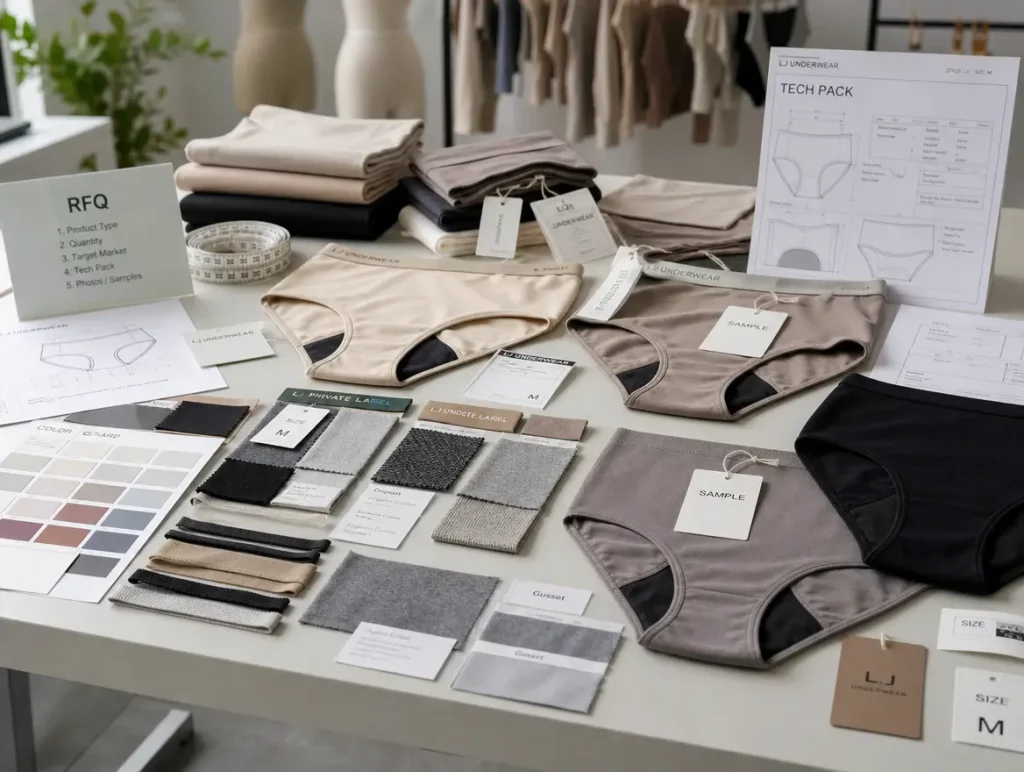
How To Submit Your RFQ
1.Send product type, quantity, and target market.
2.Attach tech packs, photos, or samples.
3.Get sample, MOQ, cost, and timeline guidance.